Physical Address
304 North Cardinal St.
Dorchester Center, MA 02124
Physical Address
304 North Cardinal St.
Dorchester Center, MA 02124

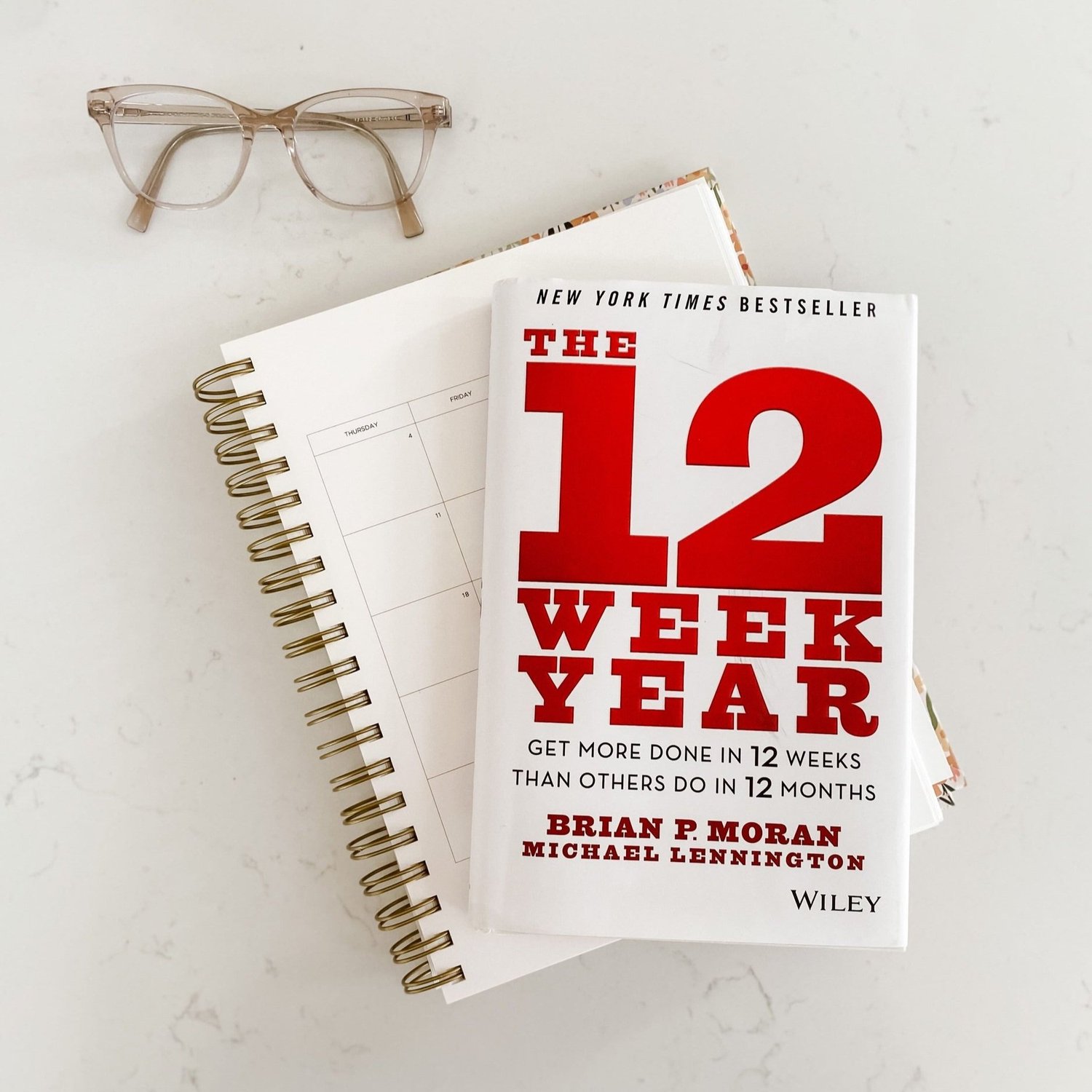
The 12 Week Year by Brian P. Moran and Michael Lennington is ideal for anyone looking to take control of their time, boost productivity, and achieve more in less time. Specifically, this book is a great fit for:
If you’re wearing multiple hats and struggling to stay focused on high-impact activities, the 12-week system helps you prioritize what truly moves the needle.
Whether you’re leading a team or climbing the career ladder, the framework offers a powerful way to break out of annual goal fatigue and start executing with clarity and urgency.
The book emphasizes measurable results and consistent action, making it perfect for roles where performance and outcomes directly impact success.
If you’re already into time-blocking, GTD, or habit tracking, this book will give you a structured model that takes goal-setting to the next level.
The 12-week cycles are perfect for academic terms, personal development sprints, or building new habits without being overwhelmed by year-long commitments.
If traditional goal-setting hasn’t worked for you, or if you procrastinate until deadlines are near, this book reframes how you approach time and accountability.
The 12 Week Year presents a powerful idea: ditch the annual goal-setting model and instead operate in 12-week cycles that treat each quarter as a “year.” The core argument is that annual plans encourage procrastination, delay urgency, and rarely deliver results. By focusing on what matters most over a shorter timeframe, you can achieve far more — and do it with more clarity, urgency, and accountability.
This book isn’t just about setting goals. It’s about building a system of execution that keeps you aligned, focused, and constantly improving. Whether you’re a professional, entrepreneur, team leader, or just trying to get more done personally, this system offers a simple, structured way to turn planning into consistent action.
Most people overestimate what they can achieve in a year — and underestimate what they can do in 12 focused weeks.
The book proposes:
This approach creates a sense of urgency and faster feedback loops, keeping you engaged and focused all year long. At the heart of the 12 Week Year system are 5 key disciplines that drive consistent results:
Success begins with clarity. Define a vision that connects emotionally to your long-term life goals — your career, relationships, health, finances, and more. This vision should act as a compass and motivator for your short-term goals.
Instead of vague yearly resolutions, break down your goals into 12-week targets. Then reverse-engineer them into weekly and daily actions. Your plan must focus on a few critical tasks that directly impact results.
Execution requires discipline. You must follow through on the plan you created, especially when motivation dips. This discipline emphasizes ownership, routine, and consistency over time.
Track performance with a weekly scorecard, not just by outcomes. The authors stress the importance of measuring lead indicators — the actions you can control — instead of lagging indicators like revenue or weight loss.
Time blocking is key: divide your week into strategic blocks (deep work), buffer blocks (admin), and breakout blocks (rest/recovery). Schedule your week ahead of time with intention, not reaction.
This is about defining why you’re doing what you’re doing.
✅ Why it matters: Without a clear “why,” goals feel empty and short-lived. Vision fuels commitment.
This discipline is about turning your vision into a concrete, actionable plan — not vague resolutions.
✅ Why it matters: Most people fail because they either don’t plan or plan without structure. This process is simple, focused, and repeatable.
This is about staying consistent — working your plan even when you don’t feel like it.
✅ Why it matters: Goals aren’t achieved in a day — they’re achieved through daily execution. Controlling your process gives you control over your results.
What gets measured gets managed.
✅ Why it matters: Without measurement, it’s easy to lie to yourself or assume you’re doing enough when you’re not.
Use time intentionally, not reactively.
✅ Why it matters: Time is your most limited resource. Managing it well ensures you spend it on what matters most — not just what’s urgent.
Each “year” lasts 12 weeks. This rhythm allows you to plan, execute, and review regularly — 4 “years” in one calendar year.
Focus on 1–3 key goals and list the exact actions you must take this week to move them forward. This bridges the gap between vision and execution.
Measure what percentage of your planned weekly actions you actually completed. Aim for 85% or more to stay on track.
If you’re working in a team or with an accountability partner, hold weekly 15-minute check-ins to review performance and commit to next steps.
The 12 Week Year succeeds where traditional goal-setting often fails because it reshapes how we think about time, urgency, and execution. Here’s why this method is so effective:
Annual goals feel distant, so we procrastinate. By condensing the year into 12-week cycles, the book creates a sense of urgency that keeps you focused and consistent. Every week matters — there’s no time to waste.
The system forces you to define a few critical goals and break them down into weekly actions. This helps eliminate distractions and busywork, allowing you to concentrate on high-impact tasks.
Each 12-week cycle includes weekly scorekeeping, which creates personal accountability without needing a manager or coach. You can instantly see whether you’re on track — and adjust before it’s too late.
Instead of waiting months to evaluate progress, you assess and reflect every 12 weeks. This allows for quick learning, faster course corrections, and more momentum throughout the year.
Many people get stuck in endless planning. The 12 Week Year flips the script — the emphasis is on execution, not perfection. It teaches you to take consistent action, even when things aren’t perfectly lined up.
You can run multiple 12-week “years” in one calendar year, refining your approach as you go. It’s a sustainable rhythm that balances goal achievement with time for rest and reassessment.
Before reading The 12 Week Year, I was like most people — setting big annual goals every January, full of motivation… only to lose momentum by March. I’d tell myself, “There’s still time,” and push things off. The year would pass, and I’d achieve a fraction of what I set out to do. It was frustrating, and honestly, discouraging.
This book completely reframed how I think about time, goals, and execution.
The 12-week cycle forced me to act now, not later. Every week matters when you’re working within a compressed timeline. That created a sense of urgency I never felt with annual goals — and it eliminated procrastination.
Instead of chasing 10 different things, I chose 1 to 3 high-impact goals per cycle. With clear weekly tasks tied to those goals, I stopped getting lost in busywork and started making real progress — fast.
The weekly scorecard was a game-changer. Knowing I had to rate myself each week forced me to be honest. No more excuses like “I was busy” — either I did the work or I didn’t. And that self-accountability built confidence.
Using time blocks (especially Strategic Blocks and Breakout Blocks), I started managing my calendar with intention. I created space for deep work, handled distractions better, and gave myself permission to fully disconnect and recharge — guilt-free.
One of the biggest shifts was psychological: I stopped seeing the year as one long stretch of time and started thinking in 12-week sprints. Every quarter became a fresh start, a new opportunity to grow, and a structured checkpoint to reflect and reset.
I’ve accomplished more in shorter periods, built habits that stick, and — maybe most importantly — regained confidence in my ability to follow through. I’m no longer relying on “someday.” I’m making real, measurable progress every week.
If you’re someone who sets goals but struggles to finish them, The 12 Week Year might just change your life too.
The 12 Week Year is not about working harder — it’s about working smarter and more intentionally. It empowers you to stop drifting through the year, hoping things will happen, and start creating real momentum every single week.
If you’re tired of setting goals that never get done — or if you’re someone who gets motivated only at the end of the year when time is running out — this book can completely transform the way you approach productivity, performance, and time itself.