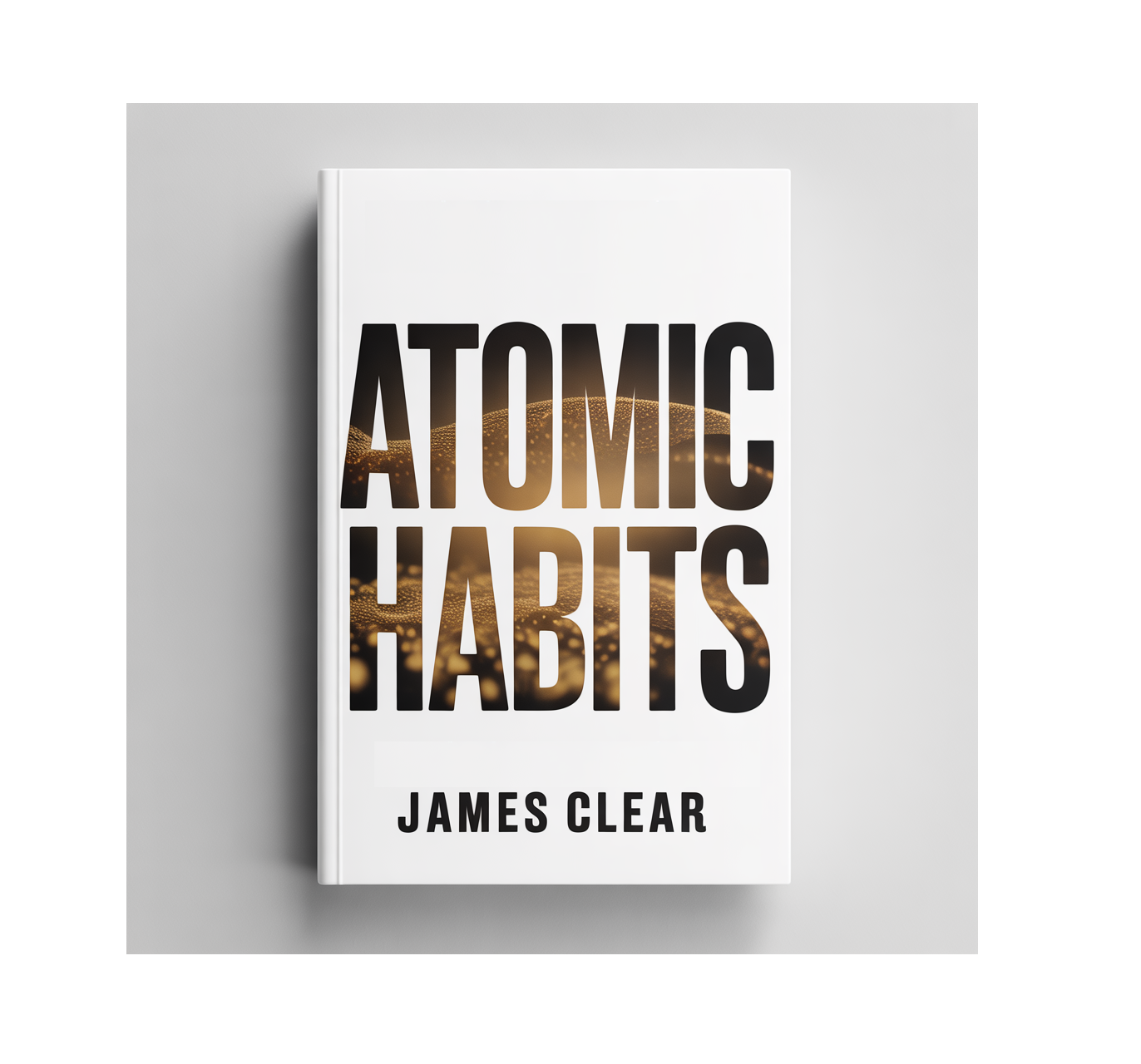
Atomic Habits
🛋️ Who Should Read Atomic Habits
James Clear’s Atomic Habits is perfect for anyone who wants to make small changes that lead to big results:
- 👔 Professionals – boost productivity, focus, and career growth without burning out.
- 🎓 Students – study smarter, manage time better, and stay consistent.
- 🚀 Entrepreneurs & Creatives – build routines that fuel innovation and long-term success.
- 🏋️ Athletes & Fitness Enthusiasts – make training and nutrition second nature.
- ❌ Habit Breakers – overcome procrastination, unhealthy eating, or other unhelpful patterns.
- 🔄 Anyone feeling “stuck” – create lasting change by fixing your system, not just “trying harder.”
💡 If you’ve ever said, “I just need more discipline” or “I wish I could stick to my goals”, this book proves the problem isn’t you—it’s your system. And systems can be redesigned.
📃 Summary of Atomic Habits
1️⃣ The Levels of Habits
James Clear explains that habits can operate on three levels:
1. Goal-Driven Habits 🎯
Habits built purely to achieve a specific outcome.
Example: Studying to ace a test.
These are obvious and short-term—once the goal is achieved, the habit often fades.
2. System-Driven Habits ⚙️
Habits focused on the process rather than the goal.
Example: Building a consistent study routine, regardless of test dates.
This approach emphasizes long-term growth, allowing you to keep winning even after achieving your initial goal.
3. Identity-Driven Habits 🧠
Habits that align with your self-image and beliefs.
Example: “I am a good student, so I study daily.”
This level is the most powerful because it reshapes who you are, not just what you do.
⚠️ The Arrival Fallacy: Chasing goal after goal can lead to fleeting happiness. Identity-driven habits solve this by making the habit part of who you are.
People with a fixed mindset believe abilities are static. Those with a growth mindset believe they can improve—and identity-driven habits help prove this belief true through repeated action.
2️⃣ How Habits Form: The Four Stages
Clear’s habit model breaks down into Cue → Craving → Response → Reward:
- Cue – A trigger that signals the brain to start the habit (smell, sound, event, time, etc.).
- Craving – The emotional desire for change the cue creates.
- Response – The action you take to get the reward.
- Reward – The satisfaction that reinforces the habit loop.
Example:
- Cue: Coming home stressed from work.
- Craving: Wanting to relax.
- Response: Drinking a beer.
- Reward: Feeling less stressed. Over time, arriving home becomes a cue for drinking beer.
3️⃣ Key 1 — Cues: Identify and Use Them to Your Advantage
- Habits are often triggered by cues we don’t notice—start by listing your daily habits to identify these triggers.
- Use implementation intentions: “When X happens, I will do Y.”
- Try habit stacking: “After I do X, I will do Y.” Example: “After I brush my teeth, I will floss.”
- Remember: We crave the reward because of anticipation, not the pleasure itself.
- Reframe behaviors as opportunities, not obligations.
4️⃣ Key 3 — Response: Decrease the Difficulty
- We naturally prefer easy behaviors—remove friction so good habits require minimal effort.
- Make showing up easy, even if it’s just for two minutes. Momentum will grow from there.
- Remove obstacles between you and your desired habit.
5️⃣ Key 4 — Reward: Make It Fulfilling
- Celebrate small milestones.
- Visually track progress (habit tracker, calendar, journal). Seeing results reinforces the habit.
- Focus on one habit at a time to avoid overwhelm.
6️⃣ Breaking Bad Habits
To reverse the Four Laws of Behavior Change:
- Cue – Make it invisible/unnoticeable.
- Craving – Make it unattractive.
- Response – Increase the effort required.
- Reward – Make it unsatisfying.
Example: If shopping after work is your stress relief:
- Cue: Avoid the mall route.
- Craving: Reframe shopping as a wasteful habit.
- Response: Call a friend instead.
- Reward: Social connection reduces stress without overspending.
Making bad habits slightly harder also helps curb boredom and disengagement—your brain stays alert when challenged.
👌🏻 Takeaways from Atomic Habits
🎯 Mastery & Practice
- 10,000 Hour Rule – With about 10,000 hours of deliberate practice, anyone can become an expert.
- How you practice matters far more than how long you practice.
- The frequency of performing a habit is more important than the duration of each session.
📈 Small Wins & Compounding Growth
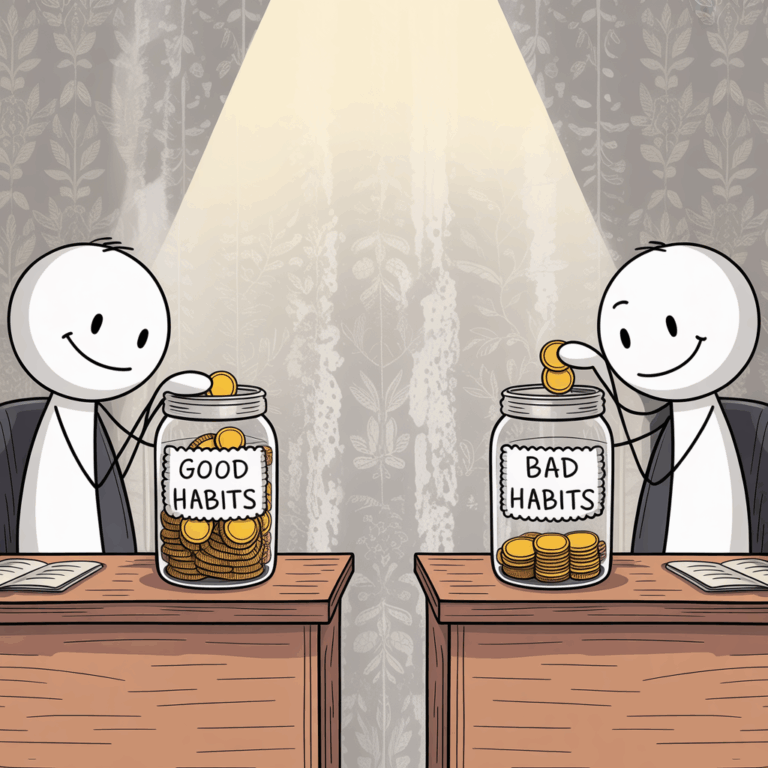
- Build 1% improvements every day—small gains compound into extraordinary results over time.
- When you understand how compounding habits work and stay committed, you’ll eventually reach a breakthrough moment—often seen as “overnight success” by others.
🧠 Mindset & Identity
- People avoid changes that could improve their lives because they threaten their identity and push them out of their comfort zone.
- Identity isn’t fixed—you shape it through repeated actions.
- Shift from “I have to write this book to get published” to “I want to spend more time writing”. The first assumes one path; the second opens many.
- Time becomes a mirror of your habits: with good habits, it works for you; with bad ones, it works against you.
- Shared identity (community) strengthens personal identity and fuels motivation.
🏆 Systems vs Goals
- Goals are about winning the game. Systems are about learning how to play so you can keep winning long-term.
- Specificity removes the need for motivation—you’ve already decided what to do and just need to execute.
⚡ Dopamine & Motivation
- All habits trigger a dopamine spike when you anticipate pleasure—it creates desire.
- If the reward isn’t received, dopamine drops due to disappointment.
👥 Social Influence
- You tend to imitate the best behaviors, seeking what’s popular or widely accepted.
- The right community can help maintain good habits by providing support and accountability.
🚫 Action vs Overthinking
- Constantly searching for the best solution can trap you in inaction.
- Over-preparing without acting becomes its own bad habit.
⚙️ Effort & Friction
- Energy is limited—habits that require less effort are more likely to stick.
- Removing friction makes habits easier to maintain, even when motivation is low.
📊 Tracking & Feedback
- Visually tracking progress makes success tangible and reinforces behavior.
🎯 Challenge & Growth
- The Goldilocks Rule: peak motivation happens when a task is challenging but still within your abilities.
💪 Sacrifice & Reward
- Sacrifice energy and effort to earn rewards—doing nothing yields nothing.
🗣️ Quotes from Atomic Habits
- “It’s More Important to Play the Game Than Win.”
- “Every action you take is a vote for the type of person you wish to become.”
- “The purpose of setting goals is to win the game. The purpose of building systems is to continue playing the game.”
- “All big things come from small beginnings. The seed of every habit is a single, tiny decision…”
- “You should be far more concerned with your current trajectory than with your current results.”
- “When you fall in love with the process rather than the product, you don’t have to wait to give yourself permission to be happy.”
📒 Why This Book Works
Atomic Habits stands out because it’s not just theory—it’s a practical, science-backed guide you can start using the same day you open it. Here’s why it’s so effective:
- 🔍 Focus on Systems, Not Goals – Instead of obsessing over the end result, James Clear teaches you to build daily processes that naturally lead to success.
- 📏 The 1% Rule – Small improvements compound over time, turning minor changes into life-changing results.
- 🧠 Behavior Science Made Simple – The book uses proven psychological principles, like habit stacking and environment design, explained in plain language.
- ⚡ Actionable Framework – The 4 Laws of Behavior Change give you a clear, step-by-step method for building good habits and breaking bad ones.
- 🛠 Real-World Examples – From athletes to CEOs, you see how these principles work in different lives, making it easy to adapt to your own situation.
- ⏳ Designed for Sustainability – It’s not about willpower or motivation, but about creating habits so automatic you don’t have to think about them.
The beauty of Atomic Habits is that it makes personal growth feel achievable—even if you’ve failed before. It meets you where you are and builds you up one small step at a time.
🧬 How Atomic Habits Changed My Life
Before reading Atomic Habits, I thought achieving big goals meant massive effort, perfect discipline, and endless motivation. The result? I burned out quickly and often quit halfway.
James Clear’s book flipped my mindset. I realized success isn’t about overhauling your life overnight—it’s about tiny, consistent actions that compound over time.
Here’s what changed for me:
- ⏰ Morning Routine Upgrade – I started by waking up just 10 minutes earlier and adding one productive habit at a time. Within months, I had a full morning ritual that energizes my day.
- 📚 Daily Reading Habit – I committed to just 2 pages a day. Now, I finish a book every few weeks without even “trying.”
- 🏃 Fitness Consistency – Instead of aiming for an hour at the gym, I focused on showing up for 10 minutes. The momentum built naturally.
- ✍️ Writing Output – I wrote just one paragraph a day. Over time, those paragraphs became full articles and projects.
- 🧠 Mindset Shift – I stopped obsessing over goals and started obsessing over systems. I no longer ask, “Did I succeed yet?” but rather, “Am I showing up today?”
The biggest win? I no longer wait for motivation. My habits carry me forward—even on bad days.
💭 Final Thoughts
Atomic Habits isn’t just another self-help book—it’s a blueprint for lasting change. James Clear breaks down the science of habits into simple, actionable steps that anyone can apply, no matter their goals.
The real magic lies in its message: you don’t need to make huge leaps to change your life. You just need to get 1% better every day, and let time do the rest.
Whether you want to be healthier, more productive, more disciplined, or simply more consistent, the principles in this book work—if you work them.
Small habits might not feel powerful today, but in the long run, they shape your identity, your results, and ultimately, your future. 🌱➡️🌳