Physical Address
304 North Cardinal St.
Dorchester Center, MA 02124
Physical Address
304 North Cardinal St.
Dorchester Center, MA 02124

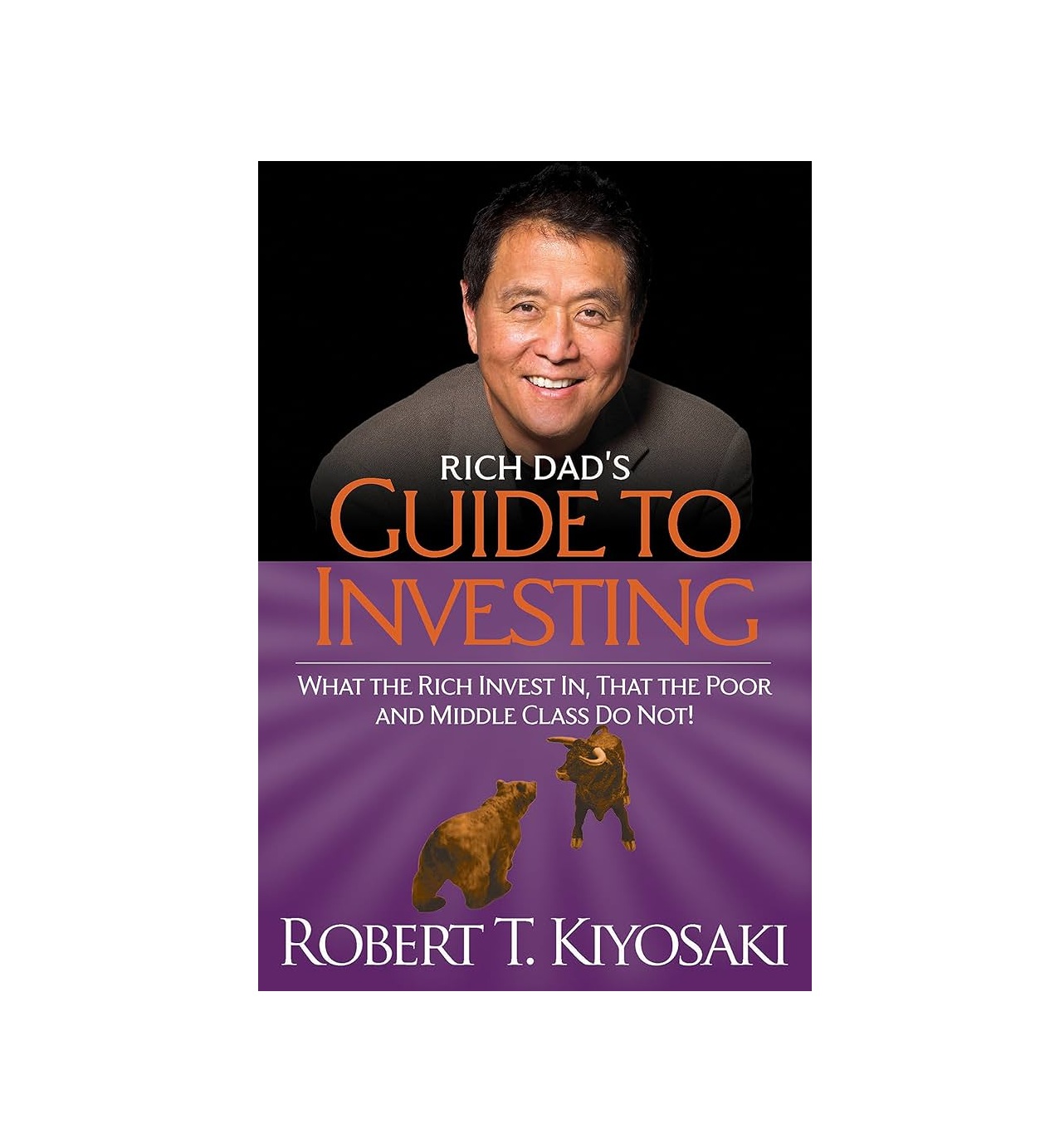
This book is for readers who already understand basic financial concepts and want to move beyond saving and budgeting into true investing.
It’s especially suited for:
It is not ideal for someone looking for step-by-step stock picks or quick wins.
Rich Dad’s Guide to Investing goes far beyond traditional personal finance advice. Rather than focusing on saving, budgeting, or choosing specific stocks, the book is centered on how investors think, how wealth is structured, and why most people never become rich despite working hard.
One of the book’s central ideas is that investing is not about buying financial products like stocks, mutual funds, or real estate. Instead, investing is a learned skill, similar to running a business. Most people lose money because they treat investing as gambling or speculation rather than as a disciplined process.
Kiyosaki emphasizes that wealthy investors do not ask, “What should I invest in?”
They ask, “How do I create or control an investment?”
This mindset separates professional investors from amateurs.
The book repeatedly contrasts two types of investors:
According to Kiyosaki, the rich don’t eliminate risk — they manage and control it.
A major theme of the book is that risk is not inherent to investing.
Risk comes from lack of financial education.
Kiyosaki explains that most people are taught to avoid risk, save money, and depend on salaries or pensions. This mindset makes them vulnerable because inflation, taxes, and economic cycles slowly erode their wealth.
Wealthy investors, on the other hand:
The book encourages readers to replace fear with knowledge.
Rather than focusing on asset price appreciation, Guide to Investing stresses the importance of cash flow.
True investors prioritize:
Price appreciation is considered a bonus, not the primary goal.
This explains why Kiyosaki favors assets like:
Contrary to popular advice, the book questions the idea that diversification is always good. Kiyosaki argues that excessive diversification is often a sign of lack of knowledge.
Professional investors prefer:
Instead of spreading money thin across many unknown investments, the wealthy concentrate on assets they understand and can influence.
A large portion of the book is dedicated to explaining why schools don’t teach investing and why financial illiteracy is widespread. Kiyosaki believes the education system trains people to be employees rather than investors.
He encourages readers to:
According to the book, financial education is the greatest asset an investor can own.
Guide to Investing promotes long-term thinking over short-term gains. Wealth is portrayed as something built gradually through:
The book discourages get-rich-quick mentalities and highlights that sustainable wealth is created through patience and preparation.
Another important concept is that investing is not a solo activity. Wealthy investors rely on:
Knowing how to build and manage a strong financial team is presented as a key advantage of sophisticated investors.
At its heart, Rich Dad’s Guide to Investing teaches that:
Rather than telling readers what to buy, the book teaches them how to think like investors — which is its greatest strength.
“It’s not how much money you make, but how much money you keep and how hard it works for you.”
“Risk is always relative to who is looking at it.”
“Sophisticated investors create investments; amateurs buy them.”
“It’s not how much money you make, but how much money you keep and how hard it works for you.”
“Risk is always relative to who is looking at it.”
“Sophisticated investors create investments; amateurs buy them.”
This book reframes investing from something uncertain and intimidating into something structured and intentional.
It encourages:
It’s less about becoming rich fast and more about becoming financially intelligent.
Guide to Investing is not a tactical manual — it’s a mental upgrade.
If you read it after understanding Kiyosaki’s core philosophy, it becomes a powerful bridge between: