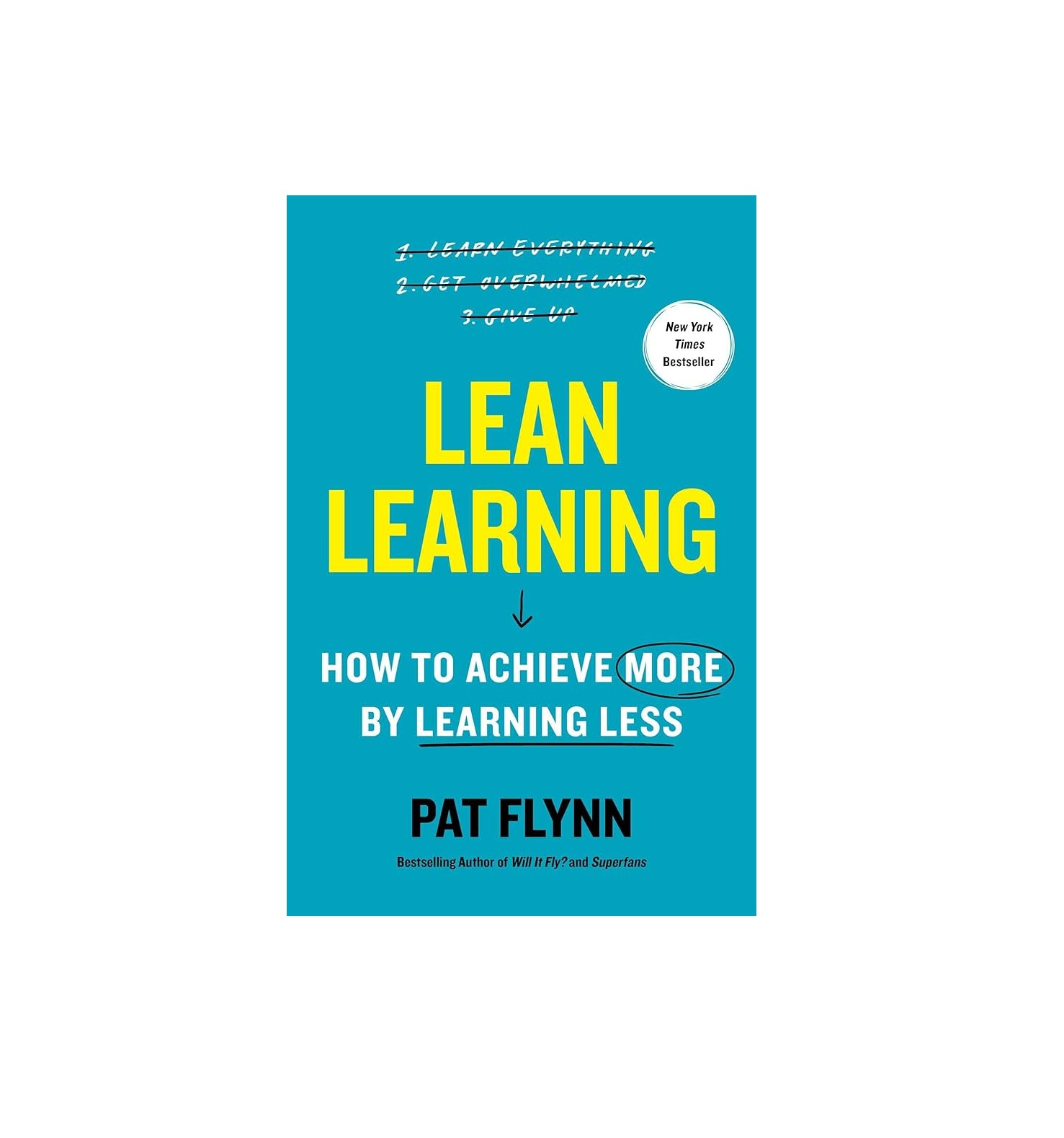
Lean Learning
🛋️ Who Should Read Lean Learning
Lean Learning is an essential read for anyone who wants to improve how they acquire knowledge, develop skills, and adapt to change in today’s fast-paced world. Whether you’re an individual learner, a team leader, or part of an organization, this book offers practical insights and strategies for continuous improvement.
You’ll benefit the most from this book if you are:
- Professionals & Entrepreneurs 🚀 People looking to learn faster, innovate smarter, and stay competitive in dynamic industries.
- Managers & Team Leaders 👥 Those responsible for training, upskilling, or leading teams who want to build a culture of continuous learning and improvement.
- Students & Lifelong Learners 🎓 Anyone seeking effective learning strategies to absorb knowledge faster and apply it in real-world scenarios.
- Educators & Trainers 📚 Teachers, mentors, and corporate trainers who want to design better learning experiences based on lean principles.
- Organizations Embracing Change 🔄 Companies aiming to adapt quickly, foster innovation, and boost productivity through smarter learning systems.
In short, if you want to learn better, faster, and smarter, Lean Learning is a must-read.
📃 Summary of Lean Learning
What Is Lean Learning? 🎯
At its core, Lean Learning is:
“A disciplined process to learn the right information at the right time so that we can solve the right problems.”
It’s about going back to basics and learning as children do — focusing on curiosity, simplicity, and action. To solve most problems:
- You don’t need to know everything about a topic.
- You don’t need to explore every possible outcome.
- You only need the minimum knowledge required to move forward.
But knowledge alone isn’t enough. You also need:
- A willingness to act on what you learn 🏃♂️
- The resilience to keep going when challenges arise 💪
As the book explains:
“Action without information is chaos, but information without action is a waste.”
The key lies in finding the perfect balance between learning and doing.
How Lean Learning Works ⚡
Lean Learning is built around a four-step process:
- Identify 🎯 — Define what you want to accomplish next.
- Learn 📚 — Gather only the information you need to move forward.
- Implement 🚀 — Apply what you’ve learned immediately.
- Review & Repeat 🔄 — Reflect, refine, and deepen your understanding.
This cycle keeps you focused, efficient, and constantly improving.
Teaching Reinforces Learning 👩🏫
One of the book’s most powerful insights is the role of teaching in mastering new skills:
“It’s only when we can turn around and share a skill with someone else that we can say we’ve really learned it.”
Teaching consolidates knowledge, exposes gaps in understanding, and provides more value to others.
Overcoming Fear & Resistance 😨
Fear is one of the biggest barriers to effective learning and growth. It often hides behind procrastination, overplanning, and self-doubt.
The book highlights that:
- Fear masquerades as rational excuses or delays in action.
- Procrastination is often fear in disguise.
- Resistance is strongest near the finish line — the closer we get to success, the stronger our fears can become.
How to Bypass Fear 🛡️
The book offers a practical framework to overcome fear and move forward:
- Acknowledge the fear — Recognize its presence instead of denying it.
- Challenge procrastination — Take small, intentional actions.
- Overcome overplanning — Avoid getting stuck in preparation mode.
- Redefine readiness — You don’t need to know everything to begin.
- Embrace imperfection — Progress beats perfection every time.
- Use fear as fuel — Transform anxiety into motivation.
Just-in-Time Information (JITI) ⏳
One of the core principles of Lean Learning is Just-in-Time Information:
“Start with just the information you need, and continue learning only what is necessary at each step.”
By blocking out everything irrelevant, you stay focused and avoid analysis paralysis.
Voluntary Force Functions 🔥
To accelerate growth, the author introduces Voluntary Force Functions — deliberately putting yourself in situations that force action and demand results.
The Recipe for an Effective Voluntary Force Function:
- A Leap of Faith Moment — Commit before you feel “ready.”
- A Time-Locked Deadline ⏱️ — Give yourself a fixed timeframe.
- High Stakes 💰 — Make the outcome meaningful.
- A Meaningful Challenge 🧗♂️ — Push beyond your comfort zone.
- Rewards on the Other End 🏆 — Celebrate progress and achievements.
Avoiding the Autopilot Trap 🛑
“Life is not a journey you want to make on autopilot.”
Growth requires conscious choices and constant reevaluation. Like a sailor adjusting their compass, you need to regularly check your direction to ensure you’re moving toward your goals.
Micro Mastery vs. Quantum Leaps 🌱🚀
There are two paths to personal and professional transformation:
- Micro Mastery 🌿 — Taking tiny, deliberate steps to improve incrementally.
- Quantum Leaps ⚡ — Making bold, audacious moves that accelerate growth.
Most journeys combine both approaches, depending on the challenges and opportunities you face.
👌🏻 Takeaways from Lean Learning
Lean Learning teaches you how to learn smarter, faster, and more effectively by applying principles inspired by lean thinking and continuous improvement. Here are the most important lessons from the book:
- Focus on Value-Driven Learning 🎯
- Learn only what directly contributes to your goals instead of accumulating unnecessary knowledge.
- Prioritize high-impact skills that bring real results.
- Embrace Continuous Improvement 🔄
- Learning is a never-ending process — keep refining your methods and adapting your approach.
- Small, consistent adjustments lead to significant long-term growth.
- Learn by Doing 🧠
- Theory alone isn’t enough — apply what you learn as quickly as possible.
- Experiment, test, and iterate to find what works best for you.
- Measure What Matters 📊
- Track your progress using clear metrics instead of vague assumptions.
- Use data and feedback to improve learning efficiency.
- Eliminate Waste in Learning ✂️
- Cut out distractions, irrelevant topics, and ineffective methods.
- Focus on practical knowledge and real-world application.
- Foster a Growth Mindset 🌱
- See mistakes as opportunities to improve, not failures.
- Stay curious and open to new ways of thinking and solving problems.
- Leverage Collaboration & Feedback 🤝
- Learn faster by sharing knowledge and seeking feedback from peers, mentors, and experts.
- Collaboration accelerates understanding and exposes blind spots.
🗣️ Quotes from Lean Learning
- 🌱 “Mastery is just the process of taking the next right step at the right time and letting those small wins build.” 🏆✨
- 💡 “Mistakes lead to innovation.” 🔄🚀
- 🤝 “Alone, we can do so little; together we can do so much.” 🌍💪
- 🏁 “Success is not final, failure is not fatal: it is the courage to continue that counts.” 💪🔥
- 🧗♂️ “It’s not just about what you achieve by conquering the challenge — it’s about what conquering the challenge allows you to achieve next.” 🚀🎯
- 📖 “The beginning is the most important part of the work.” 🌟🚪
📒 Why This Book Works
Lean Learning is effective because it simplifies the learning process and focuses on what truly matters: action, adaptability, and results. Unlike traditional learning approaches that overwhelm you with endless information, this book gives you a clear, practical framework to learn smarter and achieve more.
Here’s why it works:
- Action-Oriented Approach 🚀
- Instead of spending months studying, the book encourages you to learn just enough to take the next step.
- You focus on applying knowledge immediately, which accelerates skill-building.
- Focus on What Matters 🎯
- It teaches you to identify high-impact learning priorities instead of trying to learn everything.
- By eliminating unnecessary distractions, you achieve results faster.
- Built on Continuous Improvement 🔄
- Learning becomes an iterative process: act, measure, adjust, and repeat.
- This cycle makes learning faster, more efficient, and more sustainable.
- Reduces Overwhelm & Information Overload 🧠
- With so much content available today, it’s easy to feel stuck.
- The book shows you how to cut through the noise and focus on practical, useful knowledge.
- Real-World Examples & Strategies 📌
- Pat Flynn uses relatable case studies and personal stories to illustrate lean learning in action.
- You see how these principles work in business, personal growth, and career development.
- Mindset Shift 🌟
- You learn to embrace mistakes as learning opportunities instead of fearing them.
- This fosters resilience and encourages continuous personal evolution.
In short, Lean Learning works because it turns learning into action. It’s not about consuming more information — it’s about making small, focused steps that lead to big results.
🧬 How Lean Learning Changed My Life
Before reading Lean Learning, I believed that the more I learned, the more successful I would become. I consumed countless books, courses, and tutorials — but I often found myself stuck in analysis paralysis. I was gathering information without really applying it.
This book completely shifted my perspective. Here’s how it changed my life:
- I Stopped Overloading Myself 🧠 I used to think I had to know everything before taking action. Lean Learning taught me to focus only on what’s necessary right now. This instantly reduced my stress and gave me clarity.
- I Learned by Doing 🚀 Instead of endlessly researching, I started applying small lessons immediately. Each action, no matter how small, created momentum and helped me learn faster than ever before.
- I Started Celebrating Small Wins 🏆 The book taught me that mastery isn’t about massive leaps — it’s about consistent, incremental progress. Those small victories built my confidence and kept me motivated.
- I Embraced Mistakes as Lessons 🔄 I used to fear failure, but this book reframed mistakes as stepping stones toward success. Every setback became feedback that pushed me forward.
- I Became More Productive and Focused 🎯 By cutting out unnecessary learning and distractions, I started working smarter, not harder. I achieved more in weeks than I used to in months.
- I Built a Growth Mindset 🌱 Lean Learning didn’t just change how I study — it changed how I approach life. I now see challenges as opportunities to grow and adapt.
Today, I feel more confident, more capable, and more focused than ever before. Instead of drowning in information, I’ve learned to prioritize, act, and improve continuously.
This book didn’t just teach me how to learn — it taught me how to achieve.
💭 Final Thoughts
Lean Learning isn’t just a book about how to learn — it’s a mindset shift. It teaches us that success doesn’t come from knowing everything, but from focusing on the right things, taking consistent action, and learning from every step along the way.
In a world overflowing with information, this book is a guiding light. It helps you cut through the noise, stay focused on what matters most, and build momentum toward your goals.
Whether you’re a student, professional, entrepreneur, or lifelong learner, Lean Learning gives you a practical framework to:
- Learn faster 🏃♂️
- Apply knowledge smarter 🧠
- And achieve more with less effort 🎯
If you’ve ever felt stuck, overwhelmed, or trapped in endless learning without real progress, this book will transform the way you approach growth.
At its core, Lean Learning is about taking the next right step — and letting those small, consistent actions lead to big results.