Physical Address
304 North Cardinal St.
Dorchester Center, MA 02124
Physical Address
304 North Cardinal St.
Dorchester Center, MA 02124

💼 Aspiring Entrepreneurs – If you’re building a business or side hustle, this book will reshape how you think about risk, growth, and long-term wealth.
📈 Investors & Future Millionaires – Whether you’re just starting or already investing, the timeless principles will help you make smarter, calmer financial decisions.
🧠 Personal Development Enthusiasts – If you love books that challenge your mindset and improve your habits, this one delivers powerful money psychology insights.
👨👩👧 Everyday People – You don’t need to be a finance expert to benefit. It’s perfect for anyone who wants to manage money wisely and avoid common mistakes.
🎓 Students & Young Professionals – A must-read to build a strong financial foundation early in life, before bad habits stick.
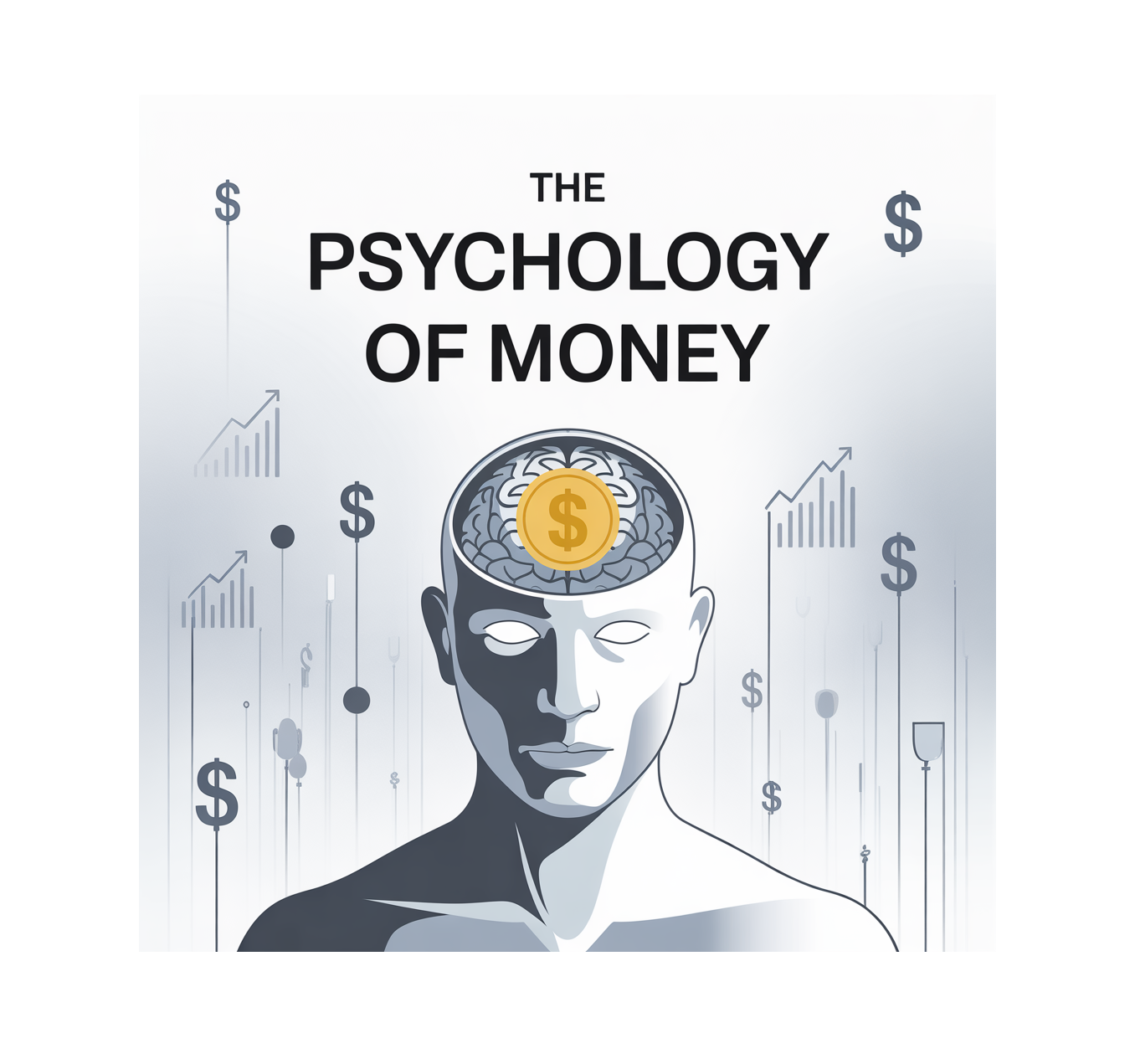
Morgan Housel’s The Psychology of Money explores a fundamental truth: doing well with money has little to do with intelligence, and a lot to do with behavior. Financial success is less about complex formulas and more about habits, attitudes, and emotional control. And because behavior is hard to teach—even to very smart people—many fail financially despite having the right knowledge.
Financial success is a soft skill, not a purely analytical one. How you behave—how patient, humble, and consistent you are—matters more than how much you know about markets or theories. No amount of studying can fully prepare someone for the emotional roller coaster of real-life investing. Fear, greed, and uncertainty influence decisions in ways that academic models can’t replicate.
Our financial decisions are heavily influenced by our personal experiences, especially those formed early in adulthood. Economists have found that entire generations anchor their investment behavior to the economic environment they grew up in. Someone raised during a bull market may take more risks, while someone shaped by a recession may remain cautious for life. This explains why rational people can come to very different conclusions about money—they’re playing different “games,” shaped by their histories.
Housel points out that people tend to attribute others’ failures to bad decisions, but see their own failures as the “dark side of risk.” Conversely, people often credit their success to skill, overlooking the role of luck. This imbalance creates dangerous overconfidence. Recognizing luck and risk humbles us and prevents us from making overly confident predictions about the future.
Financial outcomes don’t automatically bring happiness. What matters is the gap between results and expectations. Many chase wealth endlessly, believing more will solve everything. But contentment comes from aligning expectations with reality—not just pushing for “more.”
Great investing isn’t about achieving the highest possible returns—those are often rare, one-time events that can’t be sustained. The real key is to achieve pretty good returns consistently over a long time, letting compounding work its magic. Interrupting compounding for quick gains often leads to regret. The first rule of compounding, Housel writes, is simple: never interrupt it unnecessarily.
Earning money and keeping money are two very different skills.
Frugality, flexibility, and a healthy fear that your fortune could disappear help preserve wealth over time.
While planning is crucial, the most important part of any plan is to plan on the plan not going according to plan. Life and markets are unpredictable, so resilience and adaptability matter more than precision forecasts.
For Housel, the ultimate dividend of money is control over your time. Being able to wake up and say, “I can do whatever I want today,” is the highest form of wealth. It’s not luxury cars or status symbols—it’s autonomy. Studies show that having control over one’s life is a stronger predictor of well-being than material conditions. Retiring when you want to—not when you have to—is a freedom that few luxury goods can match.
He also introduces the idea of “reactance”: doing something you love on someone else’s schedule can feel just as bad as doing something you hate. Money can help you avoid this trap—if you use it wisely.
Interestingly, no one says the key to happiness is to work endlessly to buy more things or to be richer than others. What people truly want is respect and admiration, and they often mistakenly believe expensive possessions will bring it. In reality, wealth is what you don’t see. Flashy spending signals status, but true wealth is the money left unspent—the resources quietly compounding in the background.
People fall into three groups:
Building wealth has little to do with income or investment returns, and a lot to do with your savings rate. Wealth is simply the accumulated leftovers after you spend what you earn. Every dollar saved is a future piece of your life that you take back from someone else’s control.
Using historical data to predict the future can be misleading. Structural changes in the economy and markets mean that past patterns don’t always apply. Housel advises caution against relying too heavily on history without accounting for changing contexts.
Avoid extreme positions in financial planning. Be willing to change your mind as new information arises. Overconfidence often comes from focusing on what we know while ignoring what we don’t. Success requires paying the price of uncertainty, discipline, and patience—things that sound easy in theory but are much harder in practice.
The Psychology of Money isn’t about complex financial strategies—it’s about understanding yourself. It teaches that wealth is less about intelligence and more about behavior: saving, patience, humility, flexibility, and a deep respect for time. By mastering your psychology, you give compounding the time it needs to work and build lasting wealth—not just riches on paper.
Morgan Housel’s The Psychology of Money stands out because it goes beyond formulas and charts, focusing instead on the human side of finance — something most personal finance books overlook.
Reading 📘 The Psychology of Money was more than just finishing another personal finance book — it was a mindset shift. It changed the way I view money, success, and even time.
Before, I equated wealth with things I could show — gadgets, clothes, lifestyle. Housel’s idea that “wealth is what you don’t see” hit me hard. I began to prioritize saving and investing over impressing others. The result? Less stress, more control over my choices, and a deeper sense of financial independence.
I used to judge others’ financial mistakes harshly while overestimating my own “skills.” This book humbled me. It reminded me that success isn’t always skill, and failure isn’t always stupidity. Recognizing the role of luck made me more grateful — and less arrogant.
Before, I wanted quick wins — big returns, fast results. Now, I aim for steady, sustainable growth. I invest with patience, save regularly, and let compounding do the heavy lifting. That mindset shift has made my financial life far more stable.
The idea of “planning on the plan not going according to plan” changed how I approach goals. I now build flexibility into my financial strategies, expect surprises, and avoid panic when things don’t go perfectly.
Wealth, for me now, isn’t about a specific number — it’s about having control over my time. The book helped me see that the ultimate reward of money is freedom, not luxury. That shift has influenced my career decisions, how I spend, and what I say yes (or no) to.
📘 The Psychology of Money isn’t just a book about finance — it’s a book about human nature, choices, and the stories we tell ourselves about money. Morgan Housel strips away the complexity and reminds us that financial success doesn’t come from mastering spreadsheets, but from mastering our mindset and behavior.
It teaches timeless truths:
This book is a reminder to slow down, think long-term, and align your money with your values, not someone else’s expectations.
Whether you’re just starting your financial journey or looking to refine it, this book offers clarity, perspective, and wisdom that can genuinely reshape how you live and plan your future. 🌱💰