Physical Address
304 North Cardinal St.
Dorchester Center, MA 02124
Physical Address
304 North Cardinal St.
Dorchester Center, MA 02124

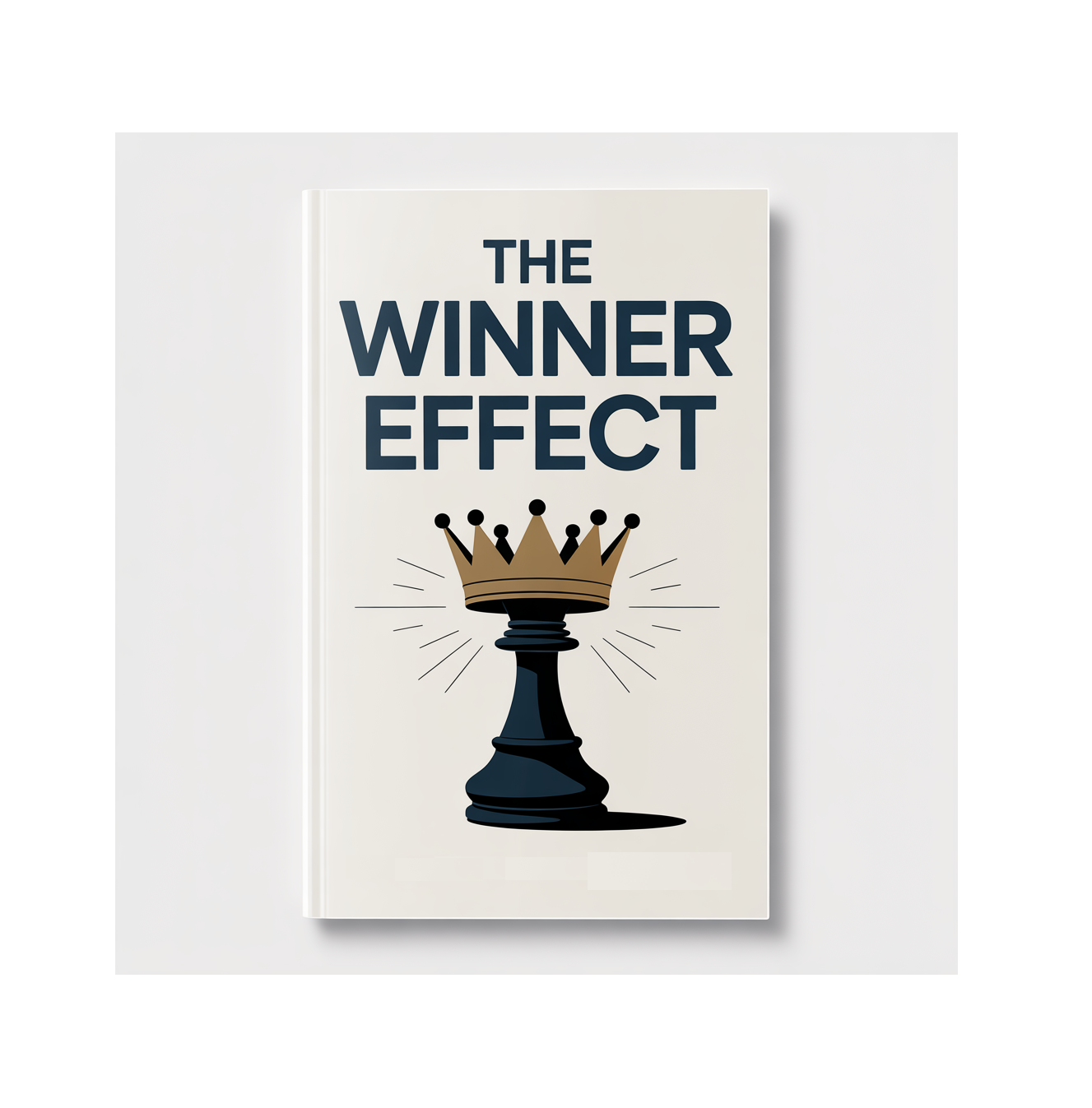
If you’ve ever wondered why winning once can make you more likely to win again — or why it sometimes leads to disastrous overconfidence — this book is for you.
The first factor influencing your ability to achieve, maintain, and build upon success is your motivation – why you want to succeed. Robertson explain that people want success for one of two reasons:
Those motivated by internal rewards are more likely to succeed than those driven by external ones. When you’re motivated by positive emotions such as personal satisfaction or enjoyment, you’re more likely to have a genuine passion for what you do. As a result, you tend to immerse yourself fully in goal-related tasks, go above and beyond minimum requirements, and produce higher quality work – leading to greater expertise and achievement over time.
For example, a software developer motivated by the joy of solving complex problems will spend extra time perfecting code, leading to innovative solutions and career advancement
On the other hand, when you’re motivated only by external rewards, you miss out on the positive emotions that inspire action. This can lead you to adopt a shallow approach to goal-related tasks, performing only the minimum requirements to obtain the reward. This lack of engagement makes it difficult to develop the traits and skills necessary to grow and excel at you do. For example, a software developer primarily motivated by receiving a salary only does the bare minimum required for each project, limiting skill development and innovation potential
Pursuing internal rewards allows you to experience an upward emotional spiral (increased feelings of happiness and satisfaction). This positive mental state enables you to access the best parts of yourself – your unique strengths and talents – and apply them to achieve your goal
For example, you may focus on a career path that promises continual promotions rather than one that fosters a genuine sense of fulfillment because your financial security and sense of identity are tied up with your career status.
If your role models praised you for making an effort, regardless of the outcome of that effort, you likely developed the belief that your skills and abilities are malleable and that you can improve them by applying yourself. As a result, you probably have a positive and constructive attitude toward challenges, viewing mistakes and failures as learning opportunities – a perspective that helps you maintain motivation and overcome setbacks
Praising Talent Discourages Growth: If your role models primarily praised your talents and your success each time you achieved something, you may have developed the belief that your skills and abilities are unchangeable parts of you you are. Likewise, you assume that your mistakes and failures indicate inherent limitations in your capabilities. And, because you don’t feel capable of surpassing your perceived limitations, you might shy away from opportunities that stretch your abilities or give up easily when tasks become difficult. For example, a student who is constantly told that they’re naturally gifted at math might avoid challenging problems, fearing that any mistakes will reveal that they’re not as smart as everyone thinks
Overprotection Erodes Confidence: However, if your role models were overly protective and made most of your decisions for you, they may have undermined your confidence, preventing you from developing the skills needed to be accountable and manage challenges independently. And, according to Robertson, if you didn’t have the opportunity to exercise control over your life, you may attribute both successes and failures to external factors beyond your control. As a result, you might feel helpless when faced with obstacles, believing that you’re incapable of overcoming them. For example, a child whose parents constantly make decisions for them might grow into an adult who struggles to take initiative at work, always second-guessing their decisions and seeking approval from others.
Your sense of control as a child shaped your basic orientation to the world—and, consequently, your approach to success.
Role models who let their children act autonomously while providing support when needed foster secure attachment: a stable sense of self and of safety in relationships. Children with secure attachment styles see the world as a safe place to explore, and understand themselves as capable individuals who can handle challenges. This fundamental sense of security about their place in the world leads to confidence in their judgment and ability to navigate new situations.
Role models who are overly protective or controlling foster anxious attachment, marked by excessive dependence and fear of separation. Children with an anxious attachment style see the world as unpredictable or threatening and understand themselves as incapable of facing challenges alone. This fundamental insecurity about their place in the world leads to a persistent need for reassurance and difficulty in trusting their judgment.
Encountering opportunities early on in life creates a snowball effect, increasing your chances of achieving ongoing success. Opportunites provide challenges that force you to learn and develop new skills. This enhances your confidence, making you more likely to seek out and capitalize on future opportunities. Additionally, opportunities help you meet new people, expanding your network with connections that often lead to further opportunities. For example, being given a chance to work on a high-profile project early in your career helps you refine your presentation skills and showcase your talents to influential people in your industry, leading to job offers that further advance your career.
On the other hand, limited access to opportunities can hinder your chances of success, regardless of your abilities or motivation. According to Robertson, not having chances to develop and showcase your skills limits your access to information, resources, and people—causing you to fall behind peers who have had these chances to prove themselves. This can diminish your confidence, leading to a sense of helplessness that prevents you from recognizing or acting upon opportunities when they do arise. For example, if you’re unable to afford unpaid internships in your desired field, you might struggle to gain the experience necessary to move up in your career.
The theory emphasizes how opportunities beget more opportunities through status-based rewards. When you successfully capitalize on an early opportunity, you often receive disproportionate recognition. This creates a halo effect where your perceived competence in one area leads others to assume you’re competent in other areas as well. As a result, you’re offered more opportunities based on this perceived status rather than solely on your skills, further widening the gap between you and those who lacked early advantages.
Each time you experience success, your brain releases dopamine, a pleasurable neurochemical designed to reward and reinforce success-generating behaviors.
In other words, each time you perform an action that leads to success, you feel a surge of pleasure that makes you want to repeat that action, potentially leading to further achievements. For example, when a business executive closes a deal, they experience a dopamine rush that motivates them to pursue more negotiations.
In addition to creating pleasurable feelings, dopamine encourages success-generating behaviors by improving your memory. When you successfully complete a task or goal, you first feel happy, then the dopamine helps your brain store the memory of that happiness. This memory motivates you to try again and reminds you how to succeed the next time you attempt that task. Dopamine-enhanced memory is a good thing, in that it helps you learn and succeed more easily in the future, but it can also have a negative influence, as it can form bad habits by motivating you to repeat pleasurable but unhealthy behaviors.
However, Robertson adds that just as with addictive substances or behaviors, your brain can become dependent on the dopamine high that comes with success. This dependency can lead you to make poor decisions in pursuit of that feeling, potentially jeopardizing your long-term success. For example, the business executive might neglect essential operational issues to focus solely on closing deals, compromising the company’s overall health.
(Shortform note: Research clarifies why dopamine dependency occurs and how it can lead to poor decisions: Repeated exposure to pleasure trains your brain to develop a tolerance to dopamine. This means that over time, you need increasingly larger doses of dopamine to feel the same level of pleasure. However, the more you trigger dopamine production, the less effective it becomes and the more you have to escalate your dopamine-seeking behavior to achieve the same high. Fortunately, you may be able to reset your dopamine tolerance through dopamine fasting. If you don’t trigger dopamine production for a while, your brain will be much more sensitive to it when you do experience it next.)
When you experience success, your body increases your testosterone levels. Robertson explains that this hormone creates both immediate and long-term effects: It boosts your confidence and willingness to take risks in the short term and, with repeated successes over time, it accumulates in your bloodstream to reinforce these traits. This increases your desire to face obstacles and pursue increasingly challenging opportunities. For example, increased testosterone levels might drive the business executive to expand into new markets that they previously considered too challenging
While increased testosterone can boost both short-term and long-term confidence, excessively high levels can result in increased aggression, impulsivity, and reduced empathy . These behaviors can alienate others, lead to poor strategic choices, and ultimately undermine the very success that led to the testosterone increase in the first place. For example, the business executive might ignore advice and dismiss a lucrative partnership opportunity because they’re overly confident in their ability to succeed alone
The fifth factor influencing your ability to achieve, maintain, and build upon success is your social status—how you’re perceived and treated by others within your social and professional circles. According to Robertson, high social status is both an outcome of prior success and a catalyst for future success. With each success, your status increases, opening doors to new opportunities. This dynamic creates a self-reinforcing cycle that can propel you toward further accomplishments.
He argues that a high social status fosters ongoing success by eliciting positive feedback from others: People expect you to succeed based on your previous achievements and reputation. This expectation leads them to behave in ways that facilitate your ongoing success—they listen to your ideas, assuming they must be valuable. They’re also more inclined to ignore your mistakes, assuming that someone of your status doesn’t make errors. As a result, you have more latitude to exert your influence and shape your environment in ways that support your success.
Preferential treatment can lead you astray, distorting your behavior in ways that undermine your success. He explains that being surrounded by people who primarily affirm your decisions can cause you to become overconfident. You might start to believe that your elevated status means you always know best, disregarding valuable input and failing to consider the perspectives and needs of others. Additionally, the qualities that helped you succeed might diminish as you gain more power and status. This occurs because high status can insulate you from the everyday challenges and interactions that initially honed your skills.
The type of motivation that drives you toward a goal influences how diligently you’ll pursue success
Your belief in your ability to overcome challenges and succeed was shaped by your childhood role models’ attit9udes toward success
If you’ve had access to opportunities that lead to success, you’re more likely to recognize and seize similar situations when they come up
Your brain’s reaction to achievement colors how you experience and respond to success
How people trat you once you’ve achieved success influences your ability to maintain it
Before reading this book, I never thought much about the psychology behind winning. I just assumed success was a mix of hard work, skill, and a bit of luck. But Ian Robertson showed me that winning itself changes the brain — chemically and psychologically — in ways that can set you up for future wins or cause you to sabotage yourself.
After learning this, I started to treat small wins as momentum builders 🏆 instead of dismissing them as insignificant. I began stacking achievable goals so my brain stayed in a winning mindset. At the same time, I became more aware of the trap of overconfidence — catching myself before rushing into decisions just because I was “on a roll.”
Now, I approach both wins and losses strategically: I use victories to build confidence, but I keep my ego in check so I’m thinking clearly. This mindset shift has helped me in work, sports, and even daily habits. 🚀
The Winner Effect is more than a book about success — it’s a deep dive into how victory reshapes your brain and behavior. Ian Robertson blends neuroscience, psychology, and real-world stories to show why winning once can make you more likely to win again… and why it can also lead to costly mistakes if overconfidence takes over.
The real power of this book lies in its balance: it teaches you how to harness the momentum of success while staying grounded enough to avoid its pitfalls. Whether you’re an athlete, entrepreneur, or simply someone striving for personal growth, understanding the winner effect can help you create a winning streak that lasts — for all the right reasons.
🎯 Bottom line: Success changes you. Make sure it changes you for the better.