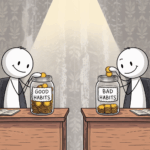
Top 0.1% Habits
👌🏻 Takeaways
- Pace is more important than perfection in business and creative work.
- Fear of public mistakes prevents many people from taking action.
- Successful people, especially the top 0.1 percent, change their relationship with failure and the emotions it triggers.
- The emotional response to failure, not the failure itself, is what holds people back.
- No one thinks about you as much as you worry they do; people are busy with their own lives.
- Spotter Studio is a tool that helps with idea generation and organization for video content creators.
- Iterative mindset and taking action are crucial for progress.
- Suppressing fear or relying solely on willpower is less effective than changing your relationship with internal experiences of failure.
- The role of the Habenula in the brain as an anti-reward or disappointment center
- Dopamine’s involvement in motivation and how negative experiences reduce motivation
⚡ Highlights
- No one thinks about you as much as you worry they do; everyone has their own lives
- The key is not avoiding failure, but fundamentally changing your relationship with the internal experience that failure triggers
- What we resist persists
- Emotions are literally the heart of all of the decisions that you make about your work, your business, your life, your relationships
- If you do care about being in the top 0.1, then it’s obviously very ideal if we can get over that fear
- It’s the resistance to the emotion that creates the uncomfortable sensation, often not really the emotion itself
🗣️ Quotes
- “The top 0.1% don’t chase success — they cultivate habits that make success inevitable”
- “Discipline is doing what’s right even when comfort whispers otherwise.”
- “While most seek validation, the rare few seek evolution — and that’s where greatness begins.”
- “Growth is a daily decision, not a one-time breakthrough. The elite repeat what others only try.”
- “Top performers don’t rise by chance — they rise by design, through small choices made with uncommon consistency”
🏃🏻♂️ 1. Pace Over Perfection
The concept that moving quickly and taking action is more valuable than waiting for perfect conditions or outcomes, especially in business and creative endeavors
🔑 Keypoints
- Successful CEOs prioritize the pace of the company over perfection
- Staying in research mode without action leads to stagnation
- Public mistakes are inevitable and part of the process
🗨️ Explanation
Focusing on speed and iteration leads to better outcomes than waiting for everything to be perfect. Making mistakes publicly is a normal part of growth and that all successful leaders have experienced this.
🏗️ Considerations
- Do not let fear of public mistakes prevent you from taking action
- Understand that research and preparation are important, but action is necessary for progress
- If you find yourself stuck in research mode, set a deadline to take action regardless of whether you feel fully prepared
- Remember a sailboat going in the wrong direction is better than one not moving at all, because at least it can be steered
🪚 2. Changing Relationship with Failure
The idea that the most successful individuals do not avoid failure, but instead change how they relate to the emotions and internal experiences that failure brings
🔑 Keypoints
- Fear of failure is often rooted in fear of the emotional response, not the event itself
- Suppressing fear or using willpower is less effective than changing your internal relationship with failure
- Top 0.1 percent of successful people embrace failure as part of growth
- People are not afraid of failure itself, but of the feelings of embarrassment, misery, or being judged that come with it
🗨️ Explanation
By changing how one relates to these emotions, it becomes easier to take risks and act
🏗️ Considerations
- Acknowledge and accept the emotions that come with failure instead of avoiding them
- Remind yourself that others are not as focused on your mistakes as you might think
- If you experience intense fear of judgment, practice reframing your thoughts to focus on personal growth rather than external opinions
🧠 3. The Habenula and Failure Avoidance
The Habenula is a small region deep inside the brain that acts as an anti-reward or disappointment center. It becomes active when expected rewards do not materialize or when negative outcomes occur, sending signals to suppress motivation for repeating the action that led to failure. This mechanism is closely tied to the neurotransmitter dopamine, which is associated with motivation
🔑 Keypoints
- The Habenula is located near the center of the brain
- It becomes active during unexpected negative outcomes
- Suppresses motivation via dampening dopamine
- Evolutionarily, it helps animals avoid repeating dangerous or unsuccessful behaviors
- In modern contexts, this mechanism can hinder risk-taking necessary for high achievement.
🗨️ Explanation
The Habenula’s function is to protect organisms from repeating mistakes that could be harmful, such as eating poisonous food or losing a dominance fight. In humans, this translates to a biological aversion to failure, which can be counterproductive in environments where repeated risk-taking is necessary for exceptional success
🏗️ Considerations
- Recognize that fear of failure is a normal, biologically driven response
- Understand that overcoming this response is necessary for exceptional achievement
- If experiencing persistent fear of failure, acknowledge it as a natural brain function and consciously work to override it for personal growth
🧘🏻♀️ 4. Emotional Acceptance and Processing
Emotional acceptance involves fully experiencing emotions rather than resisting or suppressing them. Resistance to emotions often causes more discomfort than the emotion itself. By becoming curious about emotional states and allowing oneself to feel them, individuals can process emotions more effectively and reduce their negative impact
🔑 Keypoints
- Resistance to emotions amplifies discomfort
- Fully experiencing emotions leads to clarity and reduced suffering
- Emotions are signals with specific meanings (anger = boundary, anxiety = lack of self-care, sadness = need for transformation)
- Curiosity is a key tool for processing emotions
- Emotional experiences are transient bodily sensations, often accompanied by mental stories
🗨️ Explanation
When individuals resist emotions like sadness or fear, the resistance itself creates additional suffering. By approaching emotions with curiosity—asking where they are felt in the body, how intense they are, and what their qualities are—people can process and move through emotions more easily.
🏗️ Considerations
- Practice curiosity instead of avoidance when emotions arise
- Recognize that emotions are not inherently dangerous or permanent
- If an emotion feels overwhelming, break down the experience into smaller, manageable sensations and approach each with curiosity
🩺 5. Emotions as Drivers of Decision-Making
Emotions are the primary drivers behind most decisions, even when individuals believe they are acting logically. Logic is often used to justify decisions that are fundamentally emotional. Suppressing or ignoring emotions can lead to indecision and poor outcomes
🔑 Keypoints
- Most decisions are made emotionally, not logically
- Logic is often used to rationalize emotional choices
- Fear and other emotions can cause indecision and avoidance
- Emotional clarity leads to decisiveness and better outcomes
- Suppressing emotions consumes mental energy and can worsen problems
🗨️ Explanation
Research and personal experience show that when the emotional centers of the brain are impaired, individuals struggle to make even simple decisions, despite having intact intelligence. Recognizing and processing underlying emotions can resolve indecision and lead to more effective action
🏗️ Considerations
- Acknowledge the emotional basis of important decisions
- If stuck in indecision, identify and process the emotions being avoided rather than continuing endless analysis
😱 6. Fear-Setting and Visualization of Worst-Case Scenarios
Fear-setting is a tool for decision-making that involves identifying the worst-case scenario, visualizing it in detail, and fully experiencing the associated emotions. This process helps reduce the power of fear and allows for more nuanced, less binary thinking
🔑 Keypoints
- Fear causes binary thinking and false endpoints
- Visualizing and feeling through worst-case scenarios reduces fear
- After processing the fear, individuals can see more options and subtleties
- Historical practices (samurai, stoics, Tibetan traditions) use visualization of death to overcome fear
- Fear-setting is more effective when combined with emotional processing, not just intellectual analysis
🗨️ Explanation
By imagining the worst possible outcome and allowing oneself to feel the associated emotions, individuals can reduce the grip of fear and open up to a wider range of possibilities. This approach is more effective than simply writing out scenarios, as it addresses the emotional core of the fear.
🏗️ Considerations
- Combine intellectual analysis with emotional processing for effective fear-setting
- Recognize that fear often limits thinking to binary choices
- If fear persists after visualization, continue to process the emotions until clarity emerges
🌈 7. Enjoyment as a Motivational Compass
Using enjoyment as a guide can provide sustainable motivation and energy for progress and success. Enjoyment acts as clean fuel, making tasks easier and more efficien
🔑 Keypoints
- Enjoyment fuels progress and is a sustainable source of motivation
- Tasks done with enjoyment require less energy and feel easier
- Lack of enjoyment creates resistance and inefficiency
🗨️ Explanation
Aligning asks with enjoyment leads to greater efficiency and less wasted energy. The metaphor of a boat with sails versus rowing against the wind illustrates how enjoyment can make work feel effortless.
If you’re enjoying what you’re doing, you’re going with the wind, your sails are pointed in the right direction, and it becomes easier. If not, it’s like your sails are against the wind and you have to row really hard.
🏗️ Considerations
- Seek ways to make tasks more enjoyable
- Recognize when lack of enjoyment is causing inefficiency
🏊🏻♂️ 8. The Anti-Discipline Method and Internal Resistance
Forcing oneself to do tasks through willpower, obligation, or guilt creates internal resistance and friction, leading to inefficiency. Recognizing and reducing this resistance can improve motivation and outcomes
🔑 Keypoints
- Forcing action creates counterforce and resistance
- Internal friction wastes energy and reduces efficiency
- Recognizing resistance allows for more effective strategies
🗨️ Explanation
Any attempt to force oneself or others leads to resistance, whether it’s a child, an adult, or oneself. This resistance is a source of inefficiency and should be minimized.
If someone tells you to look at them, you may resist or comply reluctantly, demonstrating natural resistance to being forced.
🏗️ Considerations
- Avoid relying solely on willpower or guilt
- Identify sources of resistance and address them constructively
👨🏻💼 9. Delegation and Task Selection among High Performers
Top performers, including CEOs and venture capitalists, often delegate tasks they dislike and focus on activities that align with their strengths and interests
🔑 Keypoints
- High performers are not necessarily highly disciplined but are aligned and invigorated
- Delegation is used to avoid tasks that are not enjoyable
- Everyone has tasks they don’t want to do, and delegation is a common solution
🗨️ Explanation
Most successful CEOs and venture capitalists delegate tasks they dislike, allowing them to focus on what they enjoy and do best
🏗️ Considerations
- Identify tasks that can be delegated
- Focus personal effort on high-value, enjoyable activities
- If you are not in a position to delegate, consider whether the task truly needs to be done or if it can be reframed or made more enjoyable
- Learn about AI Agents, they can now handle tasks like summarizing emails, conducting research, creating content drafts, and even managing simple workflows.
🛣️ 10. Semantic Shift: From ‘Have to’ to ‘Choose to’
Reframing obligations as choices restores autonomy and motivation. Recognizing that most actions are voluntary, even if consequences are undesirable, can improve engagement
🔑 Keypoints
- Most tasks are not physically forced; they are chosen to avoid consequences
- Reframing ‘I have to’ as ‘I choose to’ increases autonomy
- This shift can make tasks feel less burdensome
🗨️ Explanation
One chooses to pay taxes to avoid jail, not because of physical coercion. This semantic shift can make tasks feel more voluntary and less oppressive
🏗️ Considerations
- Practice reframing obligations as choices
- Acknowledge autonomy in decision-making
💬 11. ‘Should’ vs. ‘Want’ in Self-Talk
Using ‘should’ in self-talk drains motivation and energy, while ‘want’ energizes and motivates action. The language used in self-motivation has a significant impact on behavior
🔑 Keypoints
- ‘Should’ is a motivation killer
- ‘Want’ provides energy and motivation
- Self-talk influences feelings and actions
🗨️ Explanation
‘You should brush your teeth’ versus ‘I really want to brush my teeth’ to feel the difference in motivation and energy.
🏗️ Considerations
- Monitor and adjust self-talk to use ‘want’ instead of ‘should’.
- Be aware of the impact of language on motivation.
🎓 12. Unschooling and Natural Motivation
Removing external pressure and allowing a period of rest can lead to renewed natural motivation and faster learning, as demonstrated by unschooling studies
🔑 Keypoints
- Burnout can result from prolonged self-imposed pressure
- Unschooling allows children to recover motivation after a rest period
- Natural curiosity and desire to learn emerge without external force
- Rest and autonomy restore natural motivation
- Forced learning is less effective than voluntary engagement
🗨️ Explanation
Burn-out children are removed from school and not required to return until they are ready. After about six months of inactivity, they regain motivation and learn quickly.
🏗️ Considerations
- Allow time for recovery from burnout.
- Trust in natural motivation to re-emerge after rest.
- If encountering burnout, consider a period of rest and reduced external pressure to allow motivation to recover
⏱️ 13. Time Poverty vs. Time Abundance Mentality
Time poverty is the constant feeling of being rushed and lacking time, leading to stress and burnout. Time abundance is the mindset where time is seen as an ally, allowing for long-term planning and higher impact
🔑 Keypoints
- Time poverty leads to stress, rushing, and unfinished tasks.
- Successful individuals cultivate a time abundance mentality.
- Focusing on long-term impact yields better results.
- High-leverage tasks are more valuable than busywork.
🗨️ Explanation
Plan seeds for future growth and focus on tasks that have compounding effects. Sony CEO in the 1990s prioritized five-year outcomes over quarterly results, exemplifying long-term thinking
🏗️ Considerations
- Shift focus from immediate results to long-term goals
- Invest in actions that will pay off in the future
- Review the to-do list for high-impact items
- Avoid rushing and multitasking
- If faced with urgent demands, pause to assess which actions will have the greatest long-term benefit
🧍🏻14. The Compounding Effect of Investing in Oneself
Investing in personal development, such as communication skills or emotional intelligence, yields long-term benefits that compound over a career.
🔑 Keypoints
- Personal growth activities have lasting impact.
- Skills like communication and emotional intelligence pay dividends over time.
- Investing in oneself is a high-leverage activity.
🗨️ Explanation
Investing in high-impact skills pays dividends for years — it’s one of the smartest long-term moves you can make for your career
🏗️ Considerations
- Prioritize personal development activities.
- Recognize the long-term value of skill-building.
🤔 15. The Dangers of Shame and Constricted Thinking
Shame can lead to constricted thinking, causing individuals to believe that only unpleasant, effortful paths lead to success, when in fact enjoyable paths may be equally or more effective
🔑 Keypoints
- Shame narrows perceived options.
- Enjoyable paths to success are often overlooked.
- Awareness of shame can open up new possibilities.
🗨️ Explanation
Believing only hard, unenjoyable work leads to financial freedom is a sign of constricted thinking driven by shame. Recognizing this can help individuals find more enjoyable and effective paths
🏗️ Considerations
- Be alert to signs of shame-driven thinking.
- Explore alternative, enjoyable strategies.
✏️ Assignments & Suggestions
- Practice visualizing both success and failure, and fully experience the associated emotions.
- When facing a difficult decision, identify and process the underlying emotions rather than relying solely on logical analysis.
- Use curiosity to explore emotional states: notice where emotions are felt in the body, their intensity, and their qualities.
- Try the Tim Ferriss fear-setting exercise, but add the step of visualizing and feeling the emotions of the worst-case scenario.
- When feeling indecisive, investigate which emotions you might be avoiding and allow yourself to experience them.
- Try doing a task you dislike and ask yourself how you can enjoy it 5% more. If successful, try to increase enjoyment by 10%.
- After a work session, rate your enjoyment (e.g., zero to five stars). If not five stars, identify one experiment or change to try next time to improve enjoyment.
- For team leaders: At the end of meetings, have each participant rate their enjoyment and suggest improvements if the rating is less than five stars.
- List 50 different activities that could help you stay healthy, try each for three days, and choose the ones you enjoy most.
- Identify 20 different business experiments you could run, try them, and select the most enjoyable and effective.
- Review your to-do list and identify one to three tasks that, if completed, would make the rest of the list easier or unnecessary.
- Reflect on areas in your life where you act out of obligation rather than genuine desire, and explore ways to shift towards intrinsic motivation.
🧬 How This Changed My Life
For over a year, I had been researching rental properties — obsessing over numbers, waiting for the perfect deal, and stuck in analysis paralysis. But as I explored the habits of top performers and the value of taking imperfect action, I realized I was doing exactly what holds most people back: overthinking. After internalizing these principles, I stopped endlessly researching and finally made a move. It may not be the most profitable property on paper, but it’s a real step forward — and that momentum has already started to change everything.
💭 Final Thought
Perfection is seductive, but action is transformational. What separates the top 0.1% isn’t that they always make the best choices — it’s that they make choices, learn, and keep moving. The shift I made wasn’t just about real estate — it was about how I relate to fear, failure, and forward motion. If this article helps you take one imperfect step you’ve been avoiding, then it’s already doing its job. Start now. Adjust later. That’s how progress really happens.