Physical Address
304 North Cardinal St.
Dorchester Center, MA 02124
Physical Address
304 North Cardinal St.
Dorchester Center, MA 02124

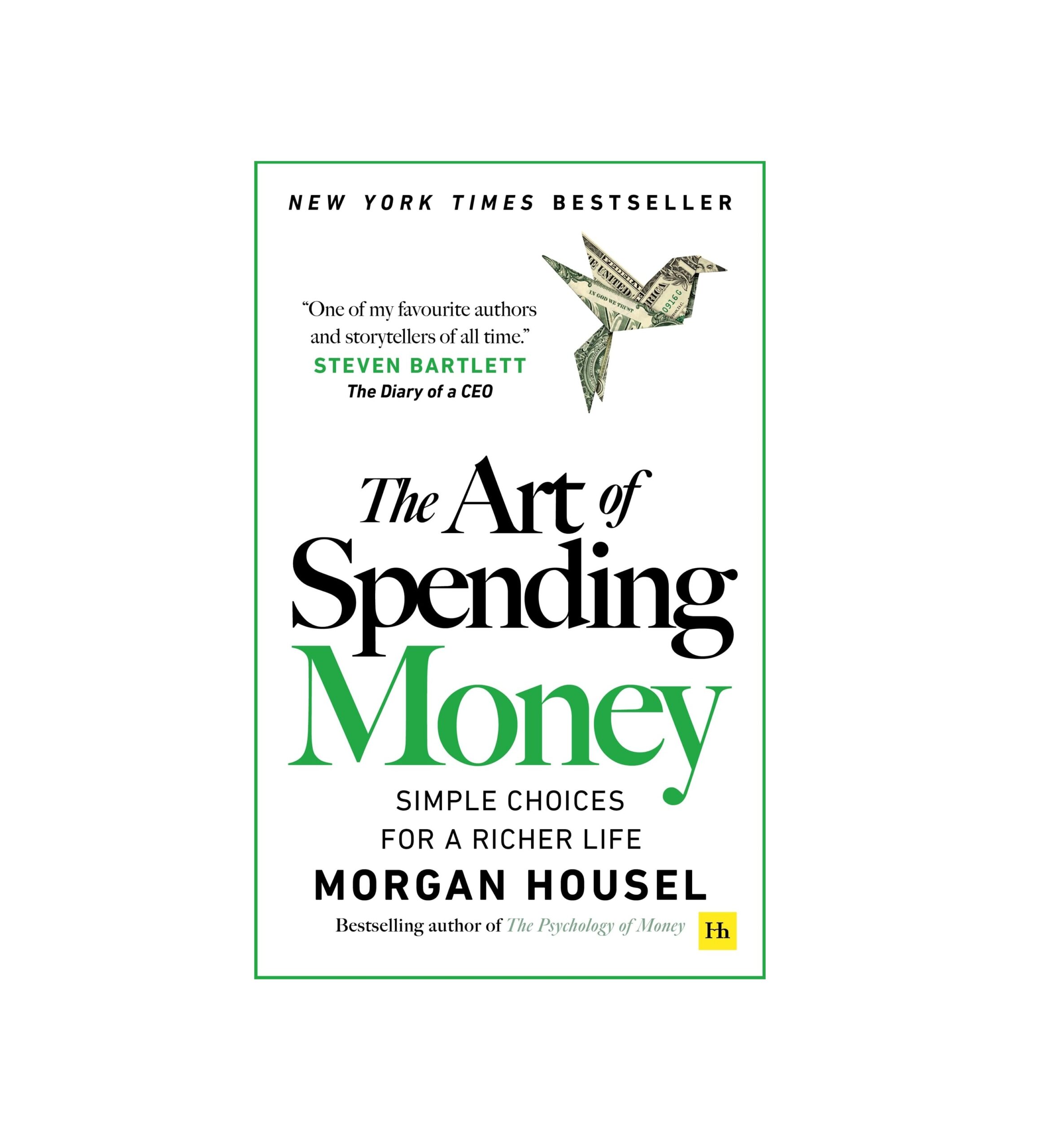
This book is not for someone who doesn’t know how to balance a budget. It’s for someone who earns decently, saves responsibly, and still feels like money isn’t really working for them. If you’ve ever bought something impressive and felt oddly empty, or denied yourself something meaningful out of vague guilt — this book is for you.
High earners, low satisfactionYou make good money but can’t pin down why it doesn’t translate into contentment.
Chronic over-saversYou’ve mastered frugality but secretly wonder if you’re optimizing for the wrong thing.
Status spendersYou buy things to signal success and sense it’s a treadmill — but can’t stop.
Psychology of Money fansYou loved Housel’s first book and want the natural next chapter: what to do once you have it.
Entrepreneurs & buildersYou’ve built wealth but never built a framework for what it’s actually for.
Readers at any income levelHousel’s insights on envy, identity, and expectations apply whether you earn $40k or $400k.
Morgan Housel made his name explaining the psychology of accumulating money. In this book, he turns his lens on the other side of the equation: what we do with it once we have it. His central argument is disarmingly simple — spending money is more art than science, because it is driven not by spreadsheets but by emotion, identity, and the silent comparison game we play with others.
The book opens with a surgeon who performs LASIK on a patient hoping the procedure will make her more attractive and respected. The surgery works. Nothing else changes. Her doctor’s verdict: “You have a problem I can’t help you with.” Housel uses this as a parable for how we use money. We think we’re buying freedom or joy, but we’re often buying validation — and no purchase can fill that hole.
From there, Housel unpacks the forces that distort our spending: envy mistaken for admiration, social debt accumulated through the need to impress, identity wrapped up in net worth, and the hedonic treadmill that resets satisfaction after every acquisition. He explores the Vanderbilt family, who burned through one of history’s greatest fortunes in three generations, as a cautionary tale about what happens when spending loses its grounding in personal values.
Crucially, Housel does not prescribe a spending plan. He doesn’t tell you to buy the Ferrari or avoid it. He argues that the right answer depends entirely on why you want it — and that most of us have never clearly examined our own why. The book’s practical guidance is about cultivating that self-awareness: experimenting with spending to find what genuinely produces joy, decoupling financial choices from identity, and understanding that the most underrated financial asset is unspent money — not because saving is virtuous, but because freedom and optionality are the returns.
Spending money is more art than science because what brings you joy is different from what brings me joy — and neither of us fully understands our own desires.
— Morgan Housel
Money you haven’t spent buys something intangible but valuable: freedom, independence, and being able to spend time in your own way.
— Morgan Housel
We confuse admiration with envy, comfort with excess, and utility with status. Untangling those three things is most of the work.
— Morgan Housel
The most dangerous financial move isn’t bad investing. It’s anchoring your identity to your net worth.
— Morgan Housel
People from a planet without flowers would think we must be mad with joy the whole time to have such things about us.
— Iris Murdoch, quoted by Housel on the failure to appreciate what we have
There is a graveyard of personal finance books that tell you to cut the lattes, automate your savings, and invest the difference. Housel does none of that. What makes this book work is the same thing that made The Psychology of Money work: he treats the reader as an intelligent adult who already knows the rules, and instead asks a harder question — why don’t the rules make you happy?
🎯 No prescriptions
Housel refuses to tell you how to spend. That restraint makes the book more useful, not less.
🧠 Psychology first
Every chapter roots financial behavior in human psychology — envy, identity, social signaling, fear.
📖 Stories that land
From the Vanderbilts to LASIK surgery, the anecdotes are precisely chosen and genuinely illuminating.
⚖️ Balanced tension
Neither a pro-FIRE nor a pro-consumption argument — Housel holds the tension between them thoughtfully.
✍️ Precise prose
Housel writes the way the best essayists do: one clear idea per chapter, no padding, no jargon.
🔄 Companion to PoM
Reads naturally as the sequel to
The Psychology of Money
— same framework, opposite direction.
Before reading this book, I had a coherent savings strategy and a murky spending philosophy. I knew how to accumulate. I didn’t know what for.
The chapter on envy versus admiration was the first genuine jolt. I realized that several of the purchases I was considering — certain cars, certain addresses, certain watches — had very little to do with what I actually wanted from life. They were answers to a social exam I’d been silently sitting, without ever having agreed to take it.
The concept of social debt reframed my relationship with lifestyle inflation entirely. Every upgrade I make creates an implicit obligation to maintain that level. That’s not wealth — it’s a cage built from nice things.
What I carry daily from this book: before any significant spending decision, I now ask one question — am I buying this for myself, or am I buying it for how it will look to others? It doesn’t always produce a clean answer, but asking the question is itself the point. Most financial mistakes, I’ve come to believe, aren’t made with bad math. They’re made with an unanswered question about identity.
The book also gave me permission to spend more freely on a few things — the experiences and tools that genuinely produce joy in my specific life, not the canonical “good investment” items. That permission, grounded in self-knowledge rather than impulse, turned out to be the most practical financial advice I’ve received in years.
Morgan Housel has done something rare: written a finance book that is genuinely useful to people who are already financially responsible. He doesn’t talk down to the reader or repeat conventional wisdom. He does something harder — he holds a mirror up to the emotional infrastructure behind your decisions and asks whether it was built by you, or built for you by comparison with others.
This is not a book you finish and then immediately open a new brokerage account or cancel your subscriptions. It’s a book you finish and then sit with quietly for a few days, reconsidering the story you’ve been telling yourself about money. That’s a harder and more valuable outcome than any tactical financial tip.
If you’ve already read The Psychology of Money, this is not optional reading — it completes the thought. If you haven’t, read that one first, then this one. In two books, Housel has articulated the most sensible and human framework for thinking about wealth I’ve encountered.