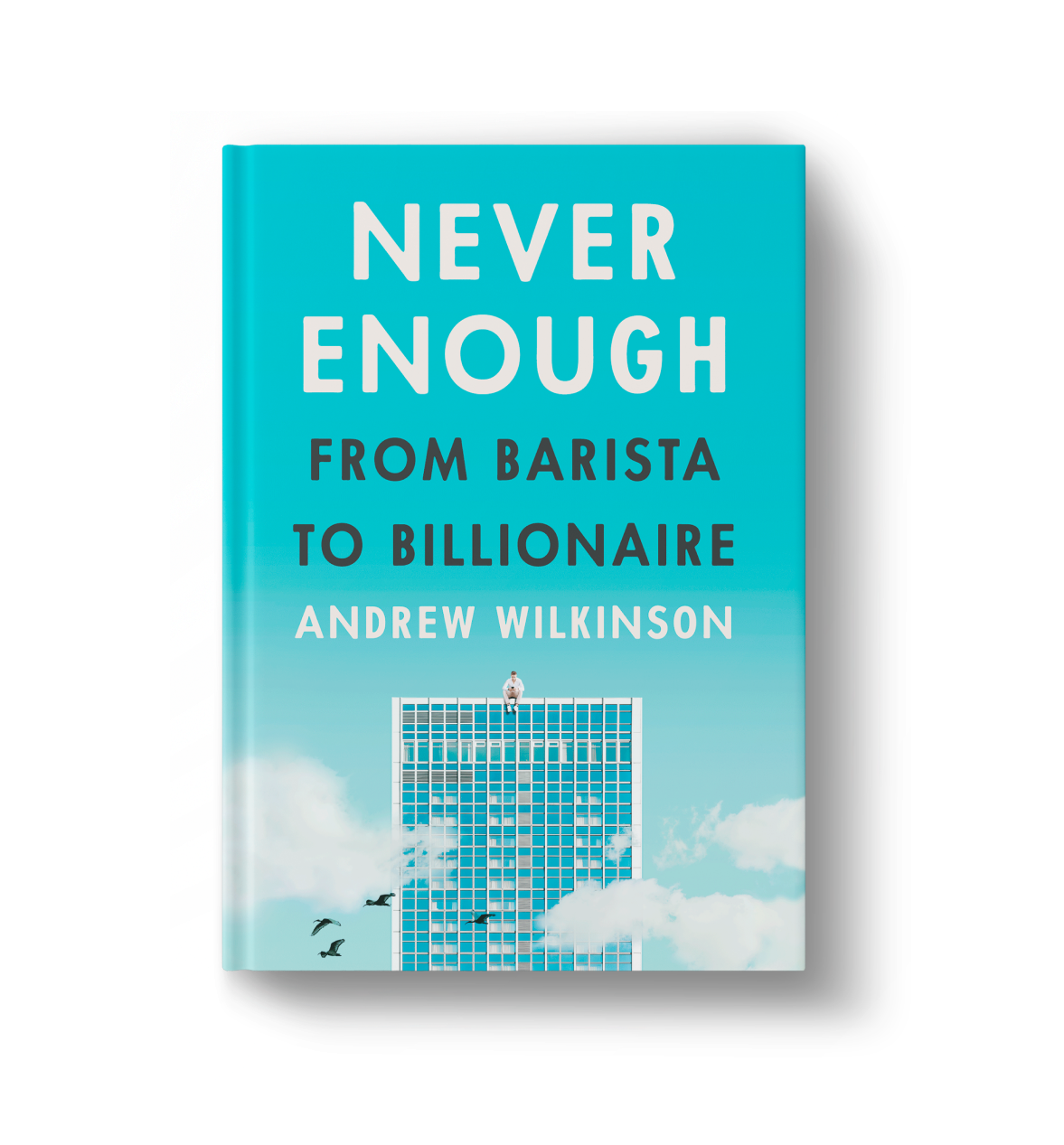
Never Enough
🛋️ Who Should Read Never Enough
- 💼 Professionals feeling stuck in the loop of overwork & under-satisfaction
- 🎓 Students & high achievers measuring worth by accomplishments
- 🚀 Entrepreneurs, creatives, & leaders facing burnout
- 🌿 Anyone tired of life being a checklist instead of an experience
📃 Summary of Never Enough
Never Enough is a deep dive into the traps of modern ambition, the illusions of success, and the often-overlooked path toward a more fulfilling life. The author explores how our culture celebrates constant growth, relentless achievement, and comparison, while rarely pausing to ask what truly matters.
One of the most striking lessons comes from the idea of the “circle of competence”—a principle borrowed from Warren Buffett. The author emphasizes that you don’t need to have all the answers. Instead, focus only on the areas where you’re truly an expert, and avoid the temptation to look smart in everything. Buffett himself preferred to avoid stupidity rather than try to be intelligent, sticking firmly to what he knew best.
The book warns against the Hedonic Treadmill, a psychological trap where we keep running faster—buying more, achieving more—just to maintain the same level of happiness. The author confesses to having sprinted on that treadmill, only to find no increase in joy, and even feeling dangerously close to “running into a wall.”
From a business perspective, the book challenges our traditional notions of leadership with Lazy Leadership—the idea that a CEO’s job is not to do all the work but to design the systems that make the work happen. The CEO is not the player or the coach, but the owner sitting high above, stepping in only for critical, high-level decisions. This concept ties into a key insight: there’s always somebody else who loves the job you hate. If accounting drains you, someone else dreams of spending hours with Excel pivot tables. If coding feels torturous, another person can’t believe they’re paid to do it. And if running a company feels like a burden, there’s someone who would gladly take that seat.
The book also unpacks Mimetic Desire—a term coined by René Girard—which explains how we often want things simply because others around us seem to value them. The danger here is that we can spend years chasing goals that aren’t truly ours, sacrificing genuine happiness for the sake of socially-assigned status.
When it comes to business growth, the book is refreshingly pragmatic: without growth, there’s no new revenue to fuel salary increases over time. But growth doesn’t have to come from building something from scratch. The author reflects on Andrew’s mistake of starting businesses from zero when it would have been easier to buy a company that was already working and let it grow. He uses a vivid metaphor: trying to build a startup from scratch is like handcrafting a makeshift boat from logs with friends who have never built a boat, then attempting to sail from Seattle to Hawaii. Possible? Yes. Miserable? Definitely. Risky? Absolutely.
In contrast, Buffett’s approach is like buying a ticket on a cruise ship with an expert captain and a mapped-out course—letting someone else handle the operational headaches while you relax and enjoy the ride. This analogy reinforces one of the most actionable insights in the book: it’s often easier to think about what you hate and work backward to design a life that avoids those things entirely.
The author closes with a humbling truth: you don’t need a brilliant startup idea to get rich. You don’t need to buy a broken company and stress over fixing it. Sometimes, all you need is to find something you genuinely believe in and invest yourself—or your capital—there.
👌🏻 Takeaways from Never Enough
- 🎯 Circle of Competence – Focus on what you know best; avoid trying to be good at everything. Success often comes from avoiding mistakes rather than chasing brilliance.
- 🏃 Hedonic Treadmill – More money, more stuff, and more success don’t necessarily bring more happiness; in fact, they can push you toward burnout.
- 🪑 Lazy Leadership – True leadership is about designing systems, not micromanaging every task. Step back so the machine can run without you.
- ❤️ Do What You Love, Delegate What You Hate – There’s always someone who loves the work you despise—find them.
- 🪞 Mimetic Desire – Beware of wanting things just because others want them; make sure your goals are authentically yours.
- 📈 Growth is Essential – Without growth, a company cannot increase salaries. But growth can come from acquisition, not just creation.
- 🚢 Cruise Ship vs. Raft – Buying a well-run business can be far less stressful than building one from scratch.
- 🗺 Reverse Life Design – Start by identifying what you hate, then design your career and lifestyle to avoid those things.
- 💵 Wealth Without Reinvention – You don’t need to reinvent the wheel to get rich—sometimes, belief and smart investment are enough.
🗣️ Quotes from Never Enough
- “The knowledge that I’ve got Enough.”
- “The things you own end up owning you.”
- “Problems are often easiest solved in reverse.”
- “Never wrestle a pig. You’ll both get dirty, but the big will enjoy it.”
- “Being a big tipper is a lot cheaper than owning the restaurant, for the same effect.”
- “The best days of a man’s life are the day he buys a boat and the day he sells it.”
- “We all seek external gratification based on what our peers tell us we should want.”
- “It’s much easier to think about what you hate, then work backward to optimize your life to avoid the things you disliked being a part of it.”
- “Look, if you just hand it all to your kids, you’re going to spoil them. They should have enough to do something, but not so much that they end up doing nothing.”
- “It’s not enough to do what you love. You also have to stop doing what you hate. The goal isn’t as many people think to not work at all; it’s to only work on things that you enjoy doing. The stuff that you’d do even that you’d do even if you didn’t get paid for it.”
- “In my life, the money i’ve spent is much less than 1% of what i’ve earned. The rest, more than 99%, is going to others. It’s no use to me, so why not share it with the world? As long as I’m around, i’ll keep running my business. But when I’m gone, it all goes back to society. All of it” (Warren Buffet).
📒 Why This Book Works
- Never Enough works because it tackles the endless cycle of striving head-on 💡.
- It blends relatable personal stories 📖 with research on achievement, self-worth 💪, and the cultural forces pushing us toward “more” 📈.
- The author doesn’t just criticize ambition—they reveal the hidden costs of living in constant comparison 🪞.
- By mixing real-world examples, psychological insights 🧠, and practical tools 🛠️, this book resonates both emotionally ❤️ and intellectually 🧩.
🧬 How Never Enough Changed My Life
- Reading Never Enough felt like someone flipped on a light in a room I didn’t know I was trapped in 💡🚪.
- It gave me language to describe the restlessness I carried 🗣️, and permission to stop chasing other people’s definitions of success 🛑.
- I started setting boundaries ✋ as acts of self-respect 💖.
- I learned to celebrate wins 🎉 without instantly rushing to the next goal 🏁.
- Most importantly, I began measuring my days by presence 🌞 and meaning 🌊—not productivity alone 📊.
💭 Final Thoughts
- At its core, Never Enough is both a wake-up call 🚨 and a gentle guide 🕊️.
- It makes you question not only how much is “enough” in your life 🤔, but also whose definition of “enough” you’ve been chasing 🏃♀️.
- You can read it once for clarity 🌱 and revisit it whenever you feel swept up in the whirlwind of constant achievement 🌪️.
- The takeaway lingers: fulfillment isn’t found in endless doing—it’s found in redefining what truly matters 🌸.