Physical Address
304 North Cardinal St.
Dorchester Center, MA 02124
Physical Address
304 North Cardinal St.
Dorchester Center, MA 02124
I was born in 1993. Which means I’ve lived through the entire rise of the smartphone — from the clunky bricks of the early 2000s to the sleek, all-consuming rectangles we carry today.
My first phone was a Nokia 6600 — indestructible, with buttons that actually clicked. Over the years I tried them all: Samsung, Apple, Huawei, Xiaomi, Blackberry, Sony, Ericsson. I was one of the early iPhone adopters — back when the iPhone 2 felt like magic in your pocket.
But before Apple and Android ruled the world, I had a Blackberry. It could do four things: make calls, send SMS, check your mailbox, and chat on BBM. That was it. No endless scroll. No algorithm deciding what I should see next. Just… simple.
Then came 2012 — my first year at university. I bought a Samsung Galaxy S3. And with it came my first real taste of scrolling. I’d open 9GAG “just for a few memes” and somehow be there for hours — mornings, between classes, late at night before bed.
Then the floodgates opened: Instagram, Snapchat, Twitter, Facebook. Back then, the feeds had an end. After a while, Facebook would simply run out of posts. You could catch up. You could close it.
But then came the upgrades: endless Facebook videos, Instagram Reels, TikTok. There was no catching up anymore — only falling deeper.
When COVID hit, my scrolling became a full-time hobby. Facebook videos while making coffee. Instagram Reels in bed. Twitter threads, news updates, and TikTok rabbit holes. Hours would vanish like minutes.
In 2021, I moved to France for work. I told myself I was “just keeping up” with the world, “just like everyone else.” Sending funny reels to friends. Staying connected. But I was living through my phone more than through my own eyes.
By 2022, things got worse. I’d wake up at 7:30 am, planning to scroll “a little” before work. But “a little” became 9:30 am. I’d scroll at the bus stop. On the bus. At my desk. During lunch, eating with one hand and holding my phone with the other. After work, same thing. Even phone calls with my long-distance fiancée would end quickly because I “needed to sleep” — and by sleep, I mean scroll until my eyes closed.
I was always tired. Not the kind of tired that a good night’s sleep fixes — a deep, brain-draining tired. The kind that steals your attention, your energy, and your willpower.
I used to believe scrolling was my way of “unwinding” after work. I’d come home thinking, I’ll just scroll for a bit to relax, then I’ll read a book. But after a few minutes on my phone, I’d feel drained. My eyes heavy, my mind foggy. I blamed it on a long day at the office — but the truth was, I wasn’t resting at all. Scrolling doesn’t recharge you; it quietly exhausts you. Every swipe, every flash of new content, forces your brain to process information at high speed. It’s like trying to relax by running a marathon in your head. The dopamine spikes keep you hooked, but they also leave you mentally tired, with less energy for anything meaningful. I didn’t need a break from work — I needed a break from my phone.
Then one day, everything stopped. The client I was working for didn’t renew my contract. Suddenly, I was at home, alone in another country, with a paycheck but no work to do. I told myself: This is my chance. I’ll learn new skills. I’ll prepare for the next client. I’ll finally focus.
But I couldn’t. Every day I planned to start. Every day I ended up doing… nothing. Procrastination won. I thought I needed motivation, so I turned to YouTube. One video changed everything. The speaker said:
“You’re not tired because you lack motivation. You’re tired because you’re addicted to social media.”
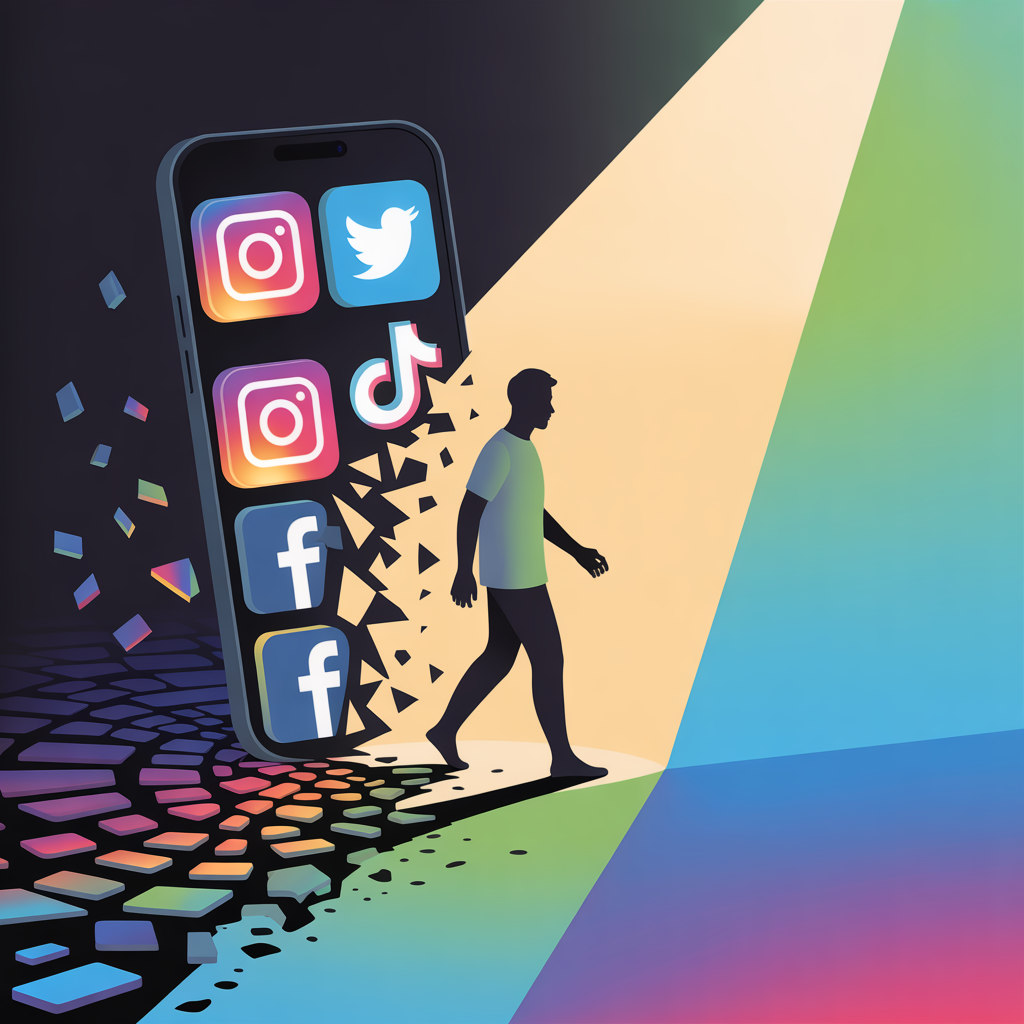
It hit me like a brick. That night, I deleted TikTok. The very next day, starting was easier. The urge to scroll still came, but I could fight it.
At first, I thought my problem was simply “bad habits” or “a lack of motivation.” But when I heard that line — “You’re tired because you’re addicted to social media” — it made me stop and think. Why would scrolling make me tired? That’s when I started learning about dopamine.
Dopamine is a neurotransmitter — a chemical messenger in the brain — that plays a major role in motivation, reward, and the feeling of pleasure. But here’s the thing: dopamine isn’t really about the reward itself — it’s about the anticipation of the reward. Your brain releases it when it expects something enjoyable is coming.
Social media companies know this better than anyone. Every notification, like, comment, or short video is a small, unpredictable reward. Sometimes you open an app and see something exciting — dopamine hit. Sometimes you don’t — and that uncertainty makes your brain crave it even more, just like a gambler pulling the lever on a slot machine.
Ask yourself: How many times a day do you grab your phone without even seeing a notification? How long can you tolerate not reading a notification after hearing that beep? Those tiny moments are the hooks of dopamine at work — invisible strings pulling you back.
Over time, these micro-rewards rewire your brain, making it harder to focus on slower, more meaningful tasks. You don’t scroll because you truly want to; you scroll because your brain has been trained to expect constant stimulation. And when you try to stop, you feel restless, bored, or anxious — not because you’re missing something important, but because your brain is addicted to the next hit.
I began cutting more. Facebook was next. Then I faced the “Twitter dilemma” — I told myself I needed it for cybersecurity news (I’m a cyber defense analyst). But then I asked myself: after seven years of scrolling these updates, what had it really changed? My career hadn’t advanced because of it. My skills hadn’t improved. It was just dopamine, forgotten the next day. So I deleted it.
Instagram was trickier. My brain whispered: If you delete it, your friends will stop sending you reels. You’ll lose connection. I compromised: a 30-minute timer. Then 15 minutes. Then 4 minutes — just to check stories and my inbox. Finally, 1 minute. That’s when I realized the truth: no one was sending me reels. I was the one sending them. Instagram was gone the same day.
Only the news was left. I read it morning and night, telling myself it was “important to stay informed.” But the truth? News works like social media. We’re not reading to be informed — we’re hunting for dopamine. No interesting news? We’re disappointed. A big headline? Dopamine rush. Both are addictive. I cut that too.
Today, I control my time. I control my choices. I live with intention.
My typical day now looks like this:
In the evenings, I sharpen my cybersecurity skills, take courses, prepare certifications, design training programs, read books on productivity and self-development, publish on my blog, explore investments, and build the business I plan to launch soon.
Now that I’ve been off social media for a while, I see the difference everywhere — especially in my friends. When we go out, I’m fully present, enjoying the conversation, noticing the details of the place, the smell of the food, the sound of the music. But across the table, they’re not really there. Every few minutes, a phone appears. A thumb swipes. Instagram stories open on autopilot. Someone laughs, but not at what’s happening in front of us — at something on a screen. It’s like watching a magician’s trick once you know how it’s done; you can see the strings pulling them away from reality. And it’s not judgment — I was exactly the same. I can almost feel the pull they’re feeling — the invisible itch to check, refresh, scroll.
What’s funny is that I’m now achieving far more than many of my friends, yet they believe they “don’t have time” to accomplish anything. I had a friend call me once, excited about starting an online retail shop to sell clothes. I encouraged him, told him to go for it. Then he said, “Actually, I’m busy for the rest of the year” — eight whole months. How can a single person with a single job be “busy” for an entire year? This is what our brain tells us when we’re caught in an addiction. Social media steals your hours so quietly that you believe you never had them in the first place. And when you try to quit, your brain resists, convincing you that you’re too occupied to change — when the truth is, you’re only busy keeping the scroll alive.
Sometimes I think about the generation before us — the Baby Boomers. When they were young, there were no smartphones, no social media feeds to scroll. Many of them never fell into the trap we did. But that doesn’t mean they escaped dopamine addiction entirely. For them, the “hit” came from somewhere else: emails. In many ways, emails were the dopamine dispenser of the old generation. They start their day reading them, just like our generation starts the day checking notifications. That’s why so many managers send endless emails and fill calendars with meetings — they’re wired for that cycle. They’re not used to quick chats or casual calls. Email is their version of the “feed,” and meetings are their way of keeping that loop going.
And if you go even further back, the older generation before them had their own dopamine source — journals and newspapers. They began their mornings flipping through pages, hunting for headlines, stories, and updates, just like we hunt for posts and reels. Different medium, same pattern: start the day with a dose of information, a spark of novelty, and the feeling of being “up to date.” The tools change, but the craving for that first hit of the day has always been there.