Physical Address
304 North Cardinal St.
Dorchester Center, MA 02124
Physical Address
304 North Cardinal St.
Dorchester Center, MA 02124

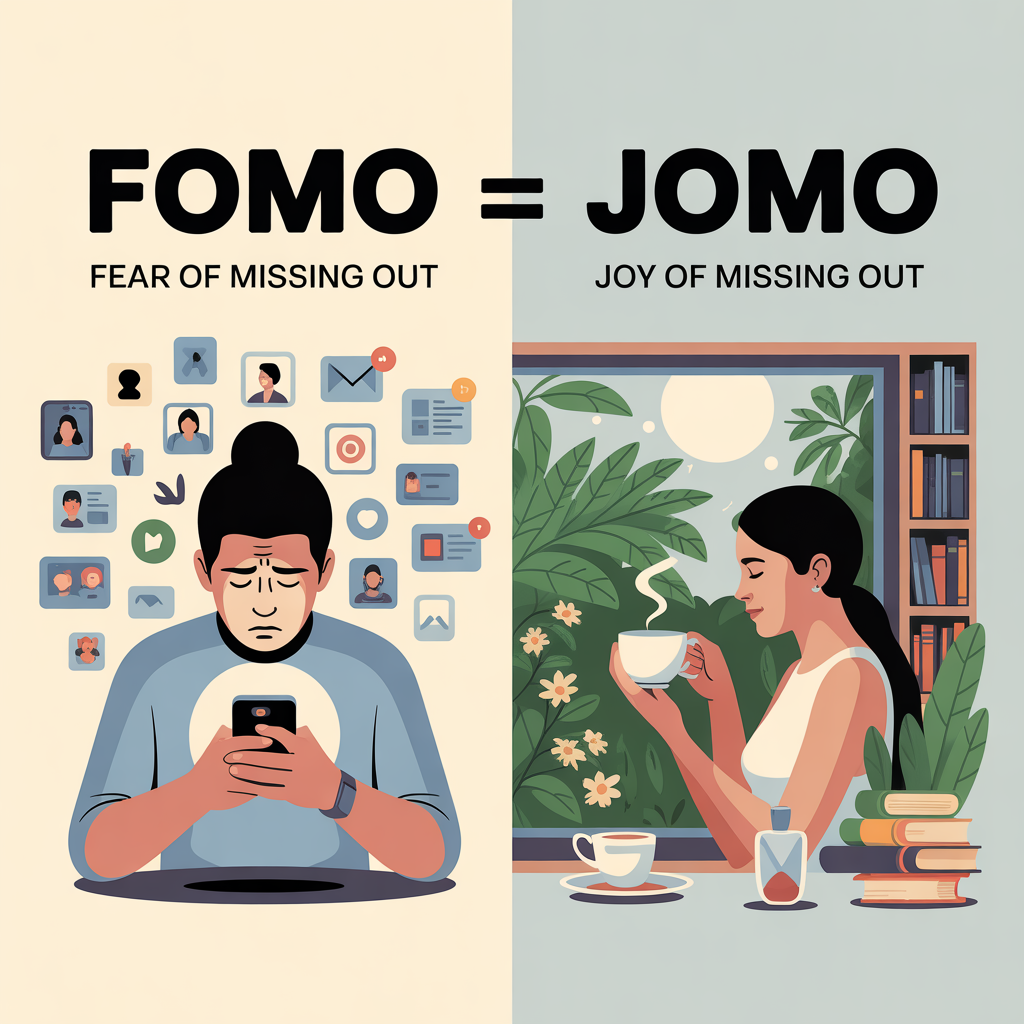
FOMO (Fear of Missing Out) is the uneasy feeling that others are enjoying experiences, opportunities, or achievements that you are not part of — and that you’re somehow “falling behind.”
It’s a mix of social anxiety, comparison, and regret, and in today’s digital world, it’s amplified by the constant stream of updates we see online.
✨ As one quote puts it:
“FOMO makes you live in everyone else’s story but your own. 📱➡️📖”
FOMO isn’t just about missing an event — it’s about what missing out represents in your mind:
As another quote reminds us:
“Comparison feeds FOMO, gratitude kills it. 🙏💭”
JOMO (Joy of Missing Out) is the positive opposite of FOMO. Instead of feeling anxious about what you’re missing, you feel content — even joyful — about the choice to step back, slow down, or say no.
It’s about presence, gratitude, and intentional living. JOMO isn’t about isolation or avoidance, it’s about aligning your time and energy with what truly matters to you.
✨ As one quote puts it:
“The joy of missing out is the art of saying ‘yes’ to yourself. 💖🙌”
JOMO gives you freedom from the pressure of comparison. It allows you to:
As another quote says:
“Peace begins where FOMO ends. 🌙✨”
Moving from FOMO (Fear of Missing Out) to JOMO (Joy of Missing Out) doesn’t happen overnight — but with intention, small steps can create big changes. Here’s how:
💡 “Silence your phone, not your peace.” 📵✨
💡 “Comparison feeds FOMO, gratitude kills it. 🙏💭”
💡 “JOMO is choosing presence over pressure. 🌸🕊️”
💡 “Peace begins where FOMO ends. 🌙✨”
For years, I lived with a constant itch — the Fear of Missing Out. Every event I didn’t attend, every trend I wasn’t part of, every opportunity I didn’t chase made me feel like I was falling behind.
If my friends went out without me, I’d scroll endlessly through their stories. If a new trend blew up online, I felt pressured to try it. If someone seemed to be advancing faster in their career, I questioned my own path. My calendar was full, but my heart felt empty.
It wasn’t one big event that woke me up. It was the accumulation of small moments: feeling drained after yet another night out I didn’t enjoy, anxiety every time I opened social media, and the overwhelming pressure of trying to be everywhere at once.
I realized that in trying to “keep up,” I wasn’t truly living. I was outsourcing my happiness to what others were doing.
The shift didn’t happen overnight. But little by little, I started embracing the Joy of Missing Out:
And slowly, the anxiety lifted. Instead of fearing what I was missing, I started savoring what I was gaining: peace, clarity, and presence.
Moving from FOMO to JOMO didn’t mean cutting myself off from the world. It meant reclaiming my time and energy. It meant recognizing that not every invitation, trend, or opportunity is meant for me — and that’s perfectly okay.
Now, when I say “no” to something, I’m not missing out. I’m making space for what truly matters.
And that simple shift has been life-changing.
Learning to move from FOMO to JOMO has been one of the most liberating shifts of my life. Instead of measuring my happiness against what others are doing, I’ve learned to measure it by how present and fulfilled I feel in my own choices.
FOMO kept me restless, always chasing the next event, trend, or opportunity. JOMO gave me permission to slow down, say no, and actually enjoy where I am — whether that means a quiet weekend at home with a book, or a meaningful night out with people I truly care about.
At its heart, JOMO isn’t about avoiding life; it’s about living it on your own terms. And when you stop fearing what you’re missing, you start discovering the joy in what you already have.