Physical Address
304 North Cardinal St.
Dorchester Center, MA 02124
Physical Address
304 North Cardinal St.
Dorchester Center, MA 02124

This book is ideal for:
If you’re comfortable with challenging ideas about money, work, and education, this book is for you.
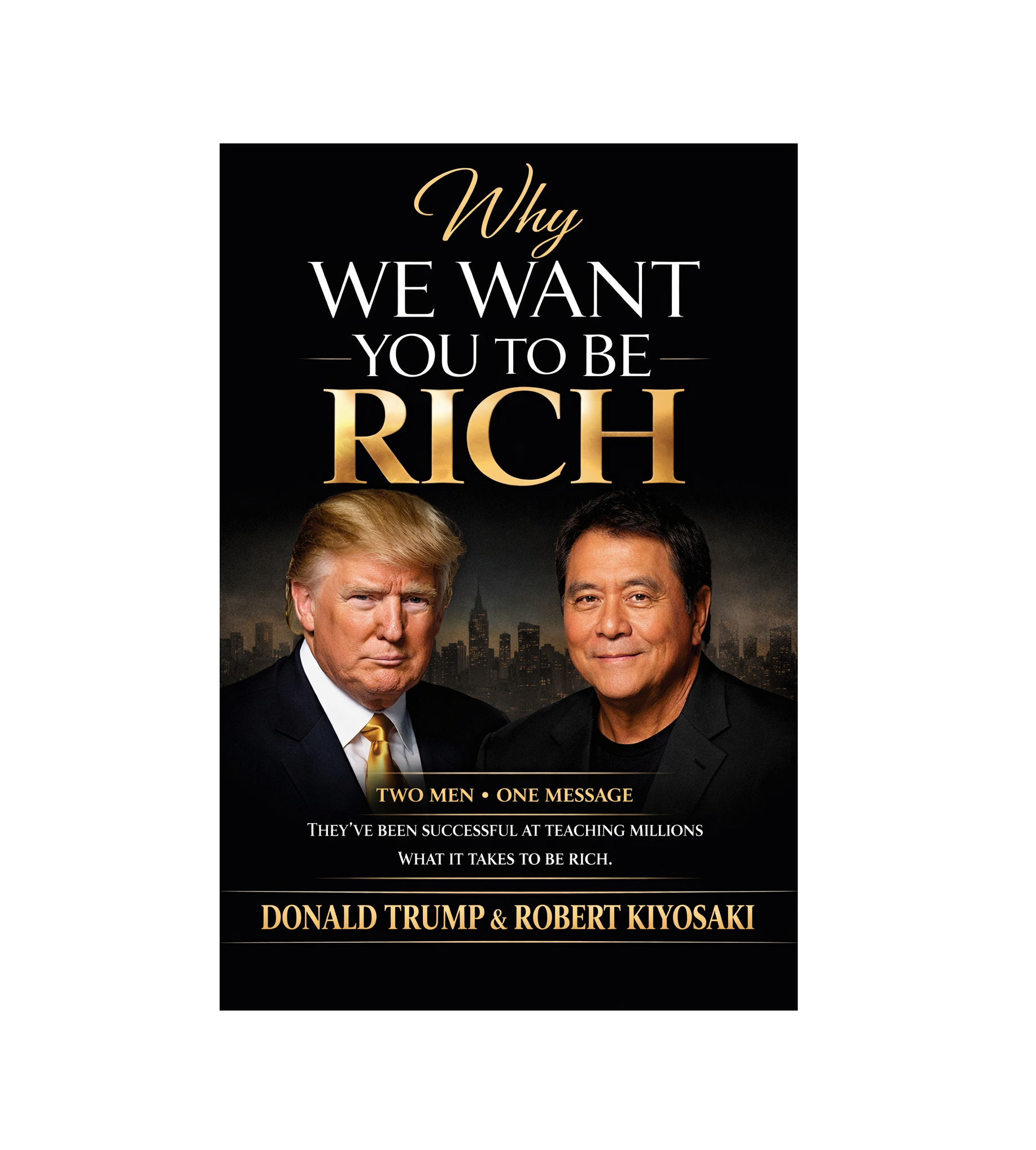
Why We Want You to Be Rich by Donald J. Trump and Robert T. Kiyosaki is a provocative and educational book that argues one central idea: financial education is no longer optional—it is essential for survival and freedom in the modern world. Rather than offering a “get rich quick” formula, the authors focus on reshaping how readers think about money, work, risk, and security.
The book opens by explaining that the economic rules most people were taught—go to school, get a good job, work hard, save money, and retire comfortably—are increasingly outdated. Trump and Kiyosaki argue that globalization, technological change, and fragile financial systems have made traditional employment and pensions unreliable. Governments, corporations, and social systems can no longer guarantee long-term security, leaving individuals responsible for their own financial future.
A major theme throughout the book is the growing gap between the rich and the poor. The authors insist this gap is not primarily caused by intelligence, effort, or opportunity, but by financial mindset and education. Wealthy individuals understand how money works, while most people are never taught the fundamentals of cash flow, assets, liabilities, taxes, and debt. As a result, many work hard their entire lives without ever achieving financial freedom.
Trump and Kiyosaki strongly emphasize the difference between income and wealth. A high salary does not equal being rich. True wealth comes from owning income-producing assets—such as businesses, real estate, investments, or intellectual property—that generate cash flow without requiring constant labor. Employees trade time for money, while the rich build systems that continue to pay them whether they work or not.
Another central idea is the controversial but important role of debt. The authors distinguish between “bad debt,” which drains money and increases financial stress, and “good debt,” which is strategically used to acquire assets that generate income. They argue that wealthy individuals use debt, tax laws, and leverage as tools, while most people avoid them out of fear or misunderstanding. This fear, according to the book, is a major reason people remain financially stuck.
The book also criticizes the traditional education system for failing to teach financial literacy. Schools prepare students to become employees, not investors or business owners. Trump and Kiyosaki argue that relying solely on formal education is dangerous in a rapidly changing economy. Instead, individuals must commit to lifelong financial learning, studying money, markets, and investing just as seriously as any profession.
Risk is another recurring theme. The authors argue that avoiding risk entirely is itself the biggest risk. Inflation, taxes, and economic downturns slowly erode savings, meaning that “playing it safe” often leads to financial decline. The wealthy learn how to manage and calculate risk, rather than run from it. Mistakes and failures are presented as necessary steps toward financial intelligence.
Throughout the book, Trump and Kiyosaki also discuss personal responsibility. They reject the idea that financial struggles are solely the result of external forces such as employers, governments, or the economy. While acknowledging that the system is flawed, they stress that blaming the system does nothing to improve one’s situation. Financial freedom begins when individuals take full ownership of their financial decisions and outcomes.
Rather than focusing on technical investment strategies, the book concentrates on mindset transformation. It challenges readers to question their beliefs about money, job security, and success. The authors encourage readers to think like owners instead of workers, creators instead of consumers, and leaders instead of followers.
In essence, Why We Want You to Be Rich is a call to action. Trump and Kiyosaki argue that a society filled with financially educated individuals is more stable, innovative, and prosperous. They claim they want people to be rich not out of greed, but because financially independent individuals are harder to control, more capable of helping others, and better equipped to navigate an uncertain world.
The book leaves readers with a clear message: wealth is not about money alone—it is about education, mindset, and the willingness to think differently. Those who take responsibility for learning how money works have the opportunity to thrive, while those who cling to outdated beliefs risk being left behind.
This book works because it:
It doesn’t pretend that getting rich is easy — but it makes it clear that staying poor is often a choice rooted in ignorance, fear, or comfort.
This book changed the way I look at income and security. Instead of focusing on earning more money, I started focusing on building assets and improving my financial intelligence.
It pushed me to question:
Most importantly, it made me realize that financial freedom starts in the mind, not the bank account.
Why We Want You to Be Rich is not a step-by-step guide — it’s a wake-up call. It’s blunt, sometimes provocative, but intentionally so.
If you’re looking for comfort, this book isn’t it.
If you’re looking for clarity, motivation, and a shift in perspective, it’s absolutely worth reading.
We don’t want you to be rich for ego — we want you to be rich so you’re free.