Physical Address
304 North Cardinal St.
Dorchester Center, MA 02124
Physical Address
304 North Cardinal St.
Dorchester Center, MA 02124

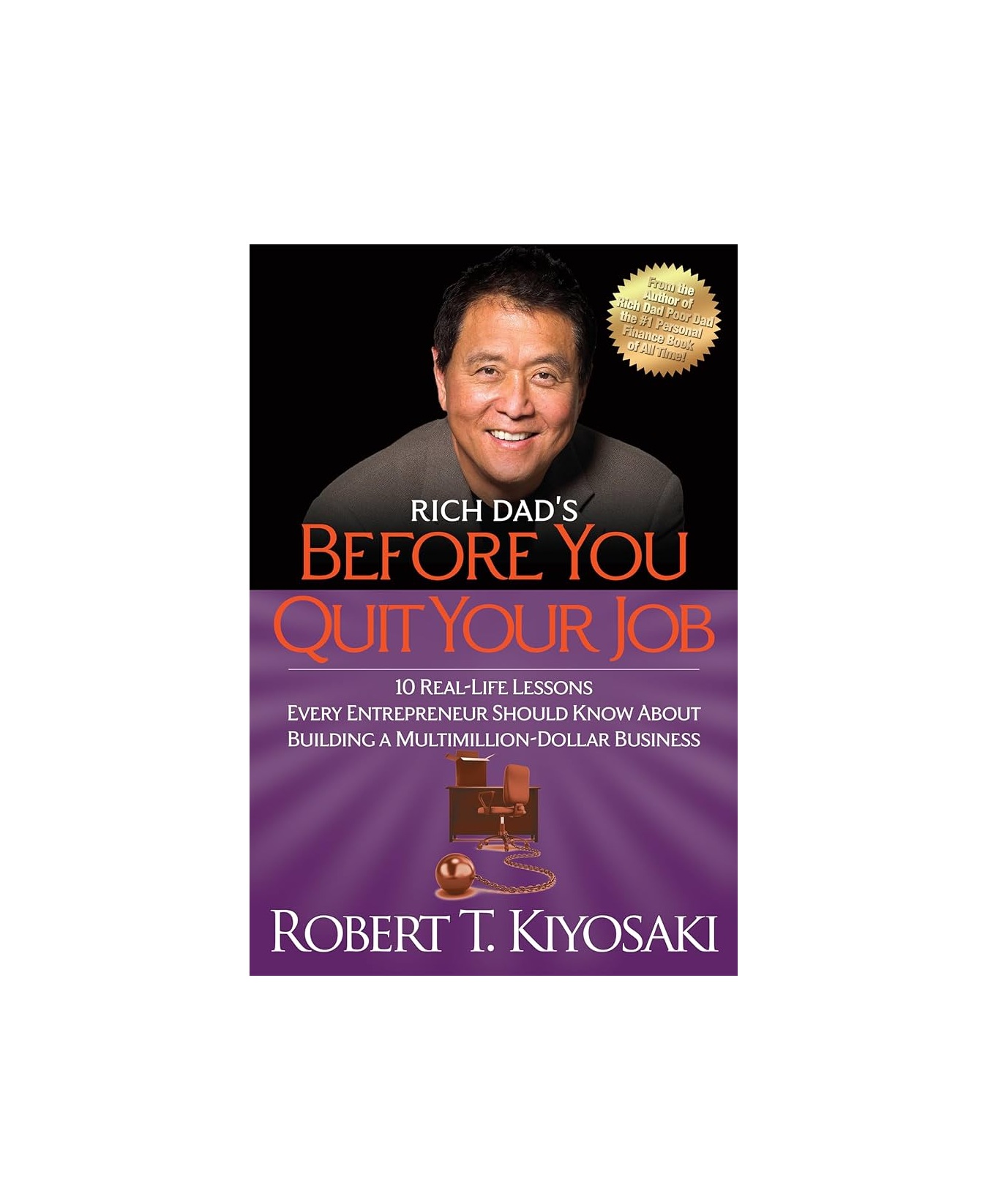
This book is written for people who dream of entrepreneurship but aren’t ready—or able—to quit their job yet.
It’s especially suited for:
This book speaks directly to those who want freedom without recklessness.
Before You Quit Your Job is a practical guide for aspiring entrepreneurs who want financial freedom without destroying their financial stability. Instead of encouraging dramatic resignations or “all-in” decisions, Robert Kiyosaki argues that quitting too early is one of the most common — and costly — mistakes people make when starting a business.
The book reframes employment not as a trap, but as a strategic advantage when used correctly.
One of the book’s core ideas is that a job can actually be an asset. While many motivational narratives portray employment as something to escape as quickly as possible, Kiyosaki explains that a job provides:
Rather than quitting impulsively, readers are encouraged to use their job to fund their education, mistakes, and early business efforts.
The book highlights that most businesses don’t fail because of bad ideas, but because of:
By quitting a job too early, entrepreneurs increase stress and desperation, which leads to poor decisions. Financial pressure forces people to chase short-term income instead of building sustainable systems.
Kiyosaki strongly emphasizes risk management. Successful entrepreneurs don’t eliminate risk — they reduce it before taking big steps.
The book encourages readers to:
Freedom, according to the book, comes from preparation — not courage alone.
While passion is often glorified in entrepreneurship, Before You Quit Your Job puts cash flow first. Passion without income leads to burnout and failure.
The book stresses that:
A business that generates consistent cash flow gives entrepreneurs options. A business built purely on passion often creates stress.
Another key theme is learning under low pressure. Keeping a job allows entrepreneurs to:
This approach turns entrepreneurship into a process, not a gamble.
The book outlines a gradual transition model:
Quitting becomes a strategic decision, not an emotional one.
Kiyosaki challenges the idea that urgency leads to success. Instead, urgency often leads to panic. Strategic thinking, patience, and preparation are positioned as the real drivers of sustainable success.
Entrepreneurship is framed as a long-term game where:
At its core, Before You Quit Your Job teaches that:
The book is a reality check for anyone tempted by “quit your job and follow your dreams” narratives.
Rather than inspiring readers to escape employment immediately, the book empowers them to use employment intelligently while building something better.
It aligns ambition with discipline and replaces fantasy with strategy.
“Your job is your first investor.”
“The goal is not to quit your job — the goal is financial freedom.”
“Entrepreneurs manage risk; gamblers ignore it.”
This book works because it:
Instead of pushing readers to leap blindly, it teaches them how to build a bridge.
This book reframes employment as a tool, not a trap.
It encourages:
It removes guilt around staying employed while pursuing independence.
Before You Quit Your Job is a grounding book — not flashy, but essential.
It reminds readers that:
For anyone serious about entrepreneurship, this book is not just helpful — it’s protective.