Physical Address
304 North Cardinal St.
Dorchester Center, MA 02124
Physical Address
304 North Cardinal St.
Dorchester Center, MA 02124

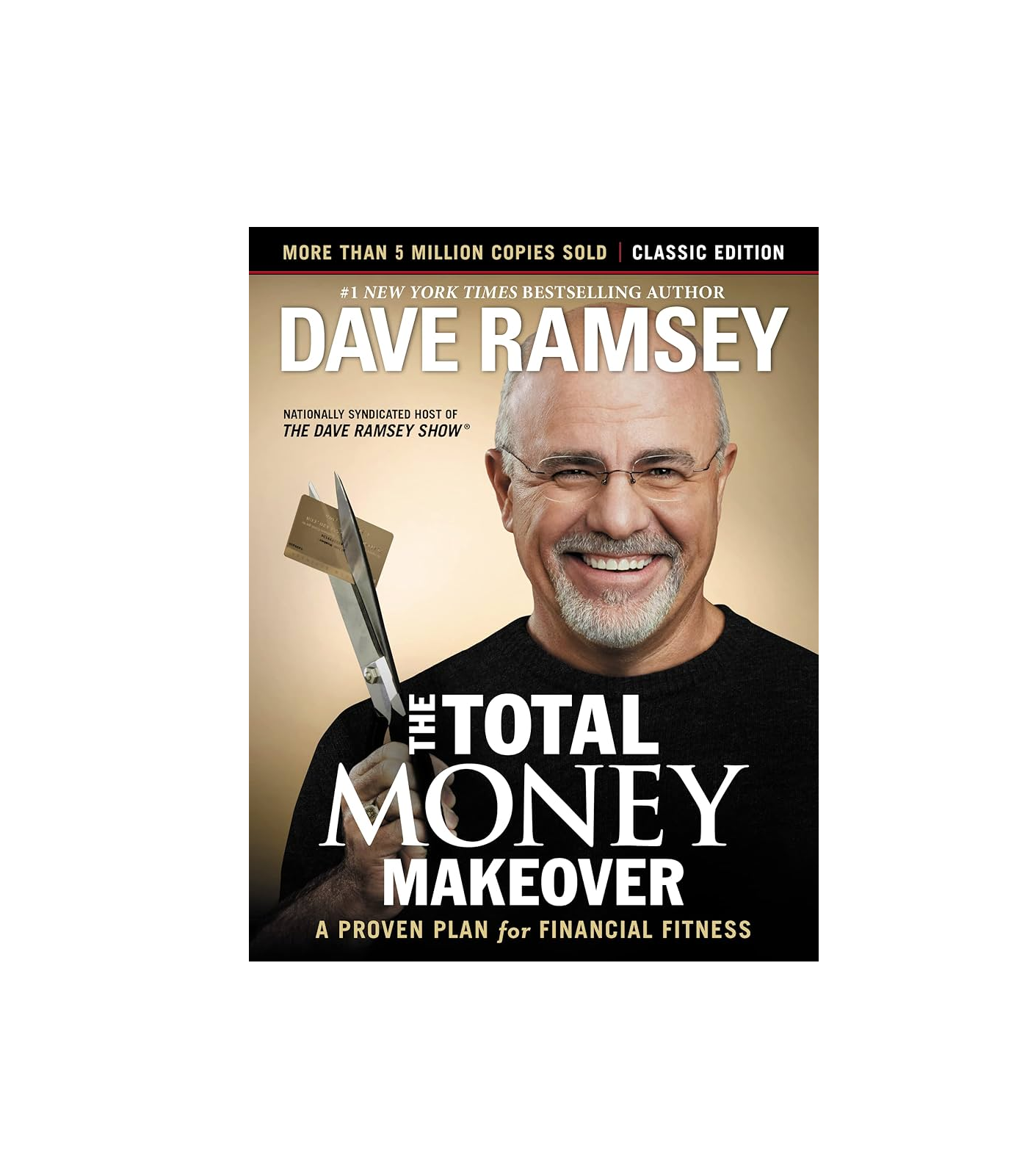
This book is for anyone who feels like their finances are out of control — or who suspects they could be doing better but doesn’t know where to start. Specifically, it’s a must-read if you:
It’s not for sophisticated investors looking for portfolio optimization or tax strategy. Dave Ramsey writes for the everyday person who needs a reset — not a refinement. If you’re drowning in debt and need someone to tell you the hard truth with a practical roadmap out, this book was written for you.
Dave Ramsey’s The Total Money Makeover is built around one central argument: most people are broke not because they earn too little, but because of the financial behaviors and myths they’ve accepted as normal. Debt is marketed as a tool, credit scores are treated as a measure of success, and “keeping up with the Joneses” has replaced actual wealth-building.
Ramsey dismantles these myths one by one and replaces them with what he calls the 7 Baby Steps — a sequential plan to achieve financial freedom:
The book isn’t just a technical manual — it’s as much about behavior change and mindset as it is about math. Ramsey is blunt, sometimes preachy, but consistently clear. He wants you to get angry at your debt, reject the culture of consumerism, and make deliberate decisions about your money instead of drifting through life financially numb.
1. Debt is not a tool — it’s a risk.
Ramsey directly challenges the idea that leveraging debt is smart. His position: if the math were always in your favor, why are so many debt users broke? The risk and psychological cost of debt are consistently underestimated.
2. The Debt Snowball works because humans are emotional, not rational.
Mathematically, paying highest-interest debt first (the avalanche method) makes more sense. But Ramsey’s insight is that motivation and momentum matter more than math. Winning fast keeps you going.
3. Your income is your most powerful wealth-building tool — but only if you free it up.
Every debt payment you eliminate is money that can now be directed toward building wealth. The goal is to get to a point where none of your income is committed to the past.
4. Normal is broke. Choose weird.
If everyone around you is in debt, driving financed cars, and living without savings — normal is dangerous. Ramsey constantly reframes financial discipline as the unconventional but correct path.
5. The emergency fund is not optional.
Without a cash buffer, every unexpected expense becomes a debt event. The $1,000 starter emergency fund isn’t about covering everything — it’s about breaking the cycle of running to credit every time life happens.
6. Budgeting is telling your money where to go before the month starts.
Ramsey is a strong advocate of zero-based budgeting — every dollar has a job. No drift, no vague spending, no “I’ll check my account and see where I am.”
7. Building wealth is a marathon, not a sprint.
The Baby Steps are sequential for a reason. Trying to skip steps — investing while in debt, for example — splits your focus and slows everything down. Intensity on one thing at a time.
“If you will live like no one else, later you can live like no one else.”
This is the book’s defining phrase. Short-term sacrifice for long-term freedom. It captures the entire philosophy in one line.
“We buy things we don’t need with money we don’t have to impress people we don’t like.”
A sharp take on consumer culture — and uncomfortably accurate for most people reflecting honestly on their spending habits.
“The enemy of ‘the best’ is not ‘the worst.’ The enemy of ‘the best’ is ‘just fine.'”
A reminder that mediocrity is the biggest trap. Staying comfortable with a situation that’s “not that bad” is what keeps people from achieving financial freedom.
“Debt is dumb. Cash is king. And the paid-off home mortgage has taken the place of the BMW as the status symbol of choice among the financially intelligent.”
Classic Ramsey. Direct, slightly provocative, and a deliberate inversion of what mainstream culture signals as success.
“Personal finance is 80% behavior and only 20% head knowledge.”
Probably the most important insight in the book. You don’t need a finance degree to get rich. You need to change what you do with your money every day.
Most personal finance books assume you’re already somewhat rational about money. The Total Money Makeover starts from the opposite assumption: that most people are making emotional, impulsive, socially driven decisions with their money — and it meets them there.
The framework is radically simple. Seven steps. Do them in order. Don’t skip. That clarity is rare in personal finance writing, where nuance and “it depends” are the norm. Ramsey made a deliberate choice to remove optionality for the beginner — and it works.
The Debt Snowball is psychologically brilliant. It leverages the same behavioral science that makes gamification effective: quick wins produce dopamine, and dopamine drives consistency. Ramsey understood this before it became mainstream knowledge.
Repetition is a feature, not a bug. The book hammers the same core ideas across chapters. Critics call it redundant — but repetition is a legitimate persuasion tool when the goal is behavior change. By the time you finish the book, the framework is installed.
It’s honest about trade-offs. Ramsey doesn’t promise it’s easy or fast. He explicitly says you’ll have to say no to things, delay gratification, and look weird to people around you. That honesty gives the framework credibility.
It has proof of concept at scale. Millions of people have followed the Baby Steps and documented their debt payoff journeys. That social proof matters — especially for skeptics who wonder if the plan actually works in the real world.
Reading this book reframed the way I think about money at a fundamental level. I came in with a typical professional mindset: earn, spend, manage debt as a “normal” part of life, and eventually figure out the rest. Ramsey broke that frame entirely.
The concept that hit hardest was this: my income should be building my future, not servicing my past. Every monthly debt payment is a dollar that can’t work for me. Every financed car, every revolving credit card balance is a claim on my income that hasn’t been earned yet. That realization created urgency I didn’t have before.
It also changed how I see financial decisions socially. There’s enormous social pressure to consume visibly — cars, clothes, lifestyle. Ramsey gave language to the idea that wealth and appearance of wealth are opposites. The people who look the richest are often the most financially fragile. That reframe changed what I admire and what I pursue.
Practically speaking, the book pushed me toward building real emergency reserves and being far more intentional about where every euro goes at the start of the month. It reinforced the discipline of treating savings and investments as non-negotiable line items — not what’s left over after spending.
The Baby Steps gave me a clear mental hierarchy when competing financial decisions arise: where does this fit in the sequence? That clarity eliminates a lot of the analysis paralysis that used to slow me down.
The Total Money Makeover is not a sophisticated book. It doesn’t need to be.
It’s a behaviorally intelligent, relentlessly simple playbook for people who want to stop being stressed about money and start building real financial security. If you already have no debt, a full emergency fund, and maxed retirement accounts — this book has little new to offer you.
But if any part of your financial life feels out of control, uncertain, or like you’re always one emergency away from a problem — read this book. Cover to cover. Don’t skip the stories. Don’t dismiss it because it feels too basic. The basics, executed consistently, are what actually works.
The real test of this book isn’t whether you enjoy reading it — it’s whether it changes what you do on Monday morning with your paycheck. For millions of people, it has. That’s the only benchmark that matters.
Rating: 4.5/5 — Essential reading for anyone starting their financial turnaround. A bit repetitive and the tone can feel preachy, but the framework is sound and the results are proven.